

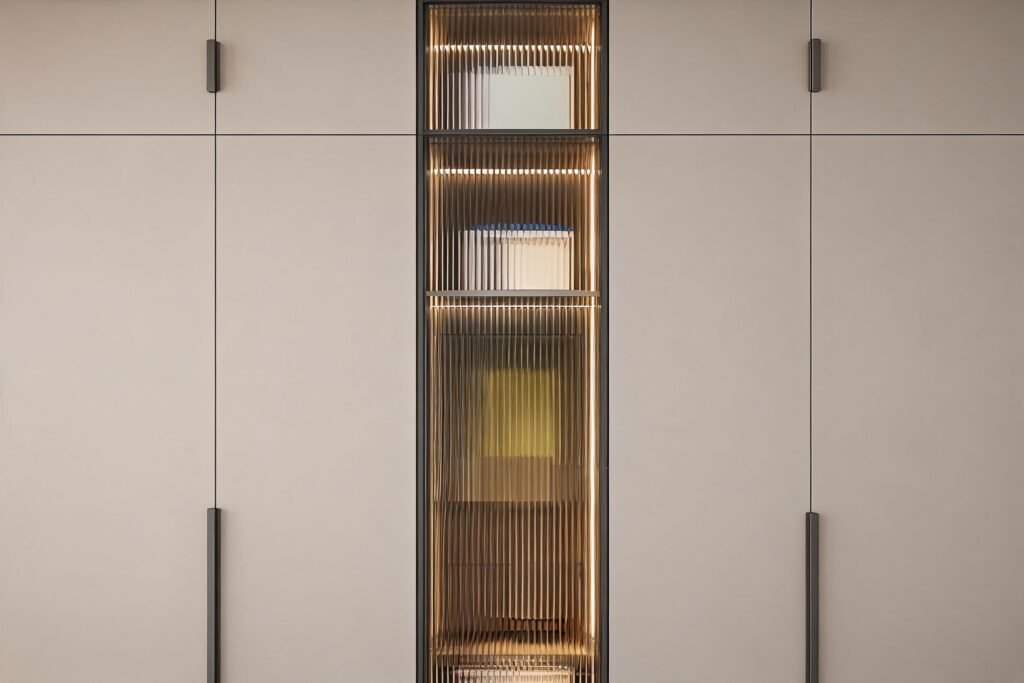
I spent most of last spring helping my sister redo her primary bedroom, and the one thing she refused to compromise on was a wardrobe with fluted glass doors. I’ll admit I thought she was being fussy. Then the installer switched on the interior lights and the whole wall went soft. I’ve been steering clients toward fluted glass wardrobes ever since, so here’s what actually matters when you shop for one.
What is a fluted glass wardrobe?
More background: Wikipedia — Float glass. More background: Wikipedia — LED lamp. More background: Wikipedia — Wardrobe.
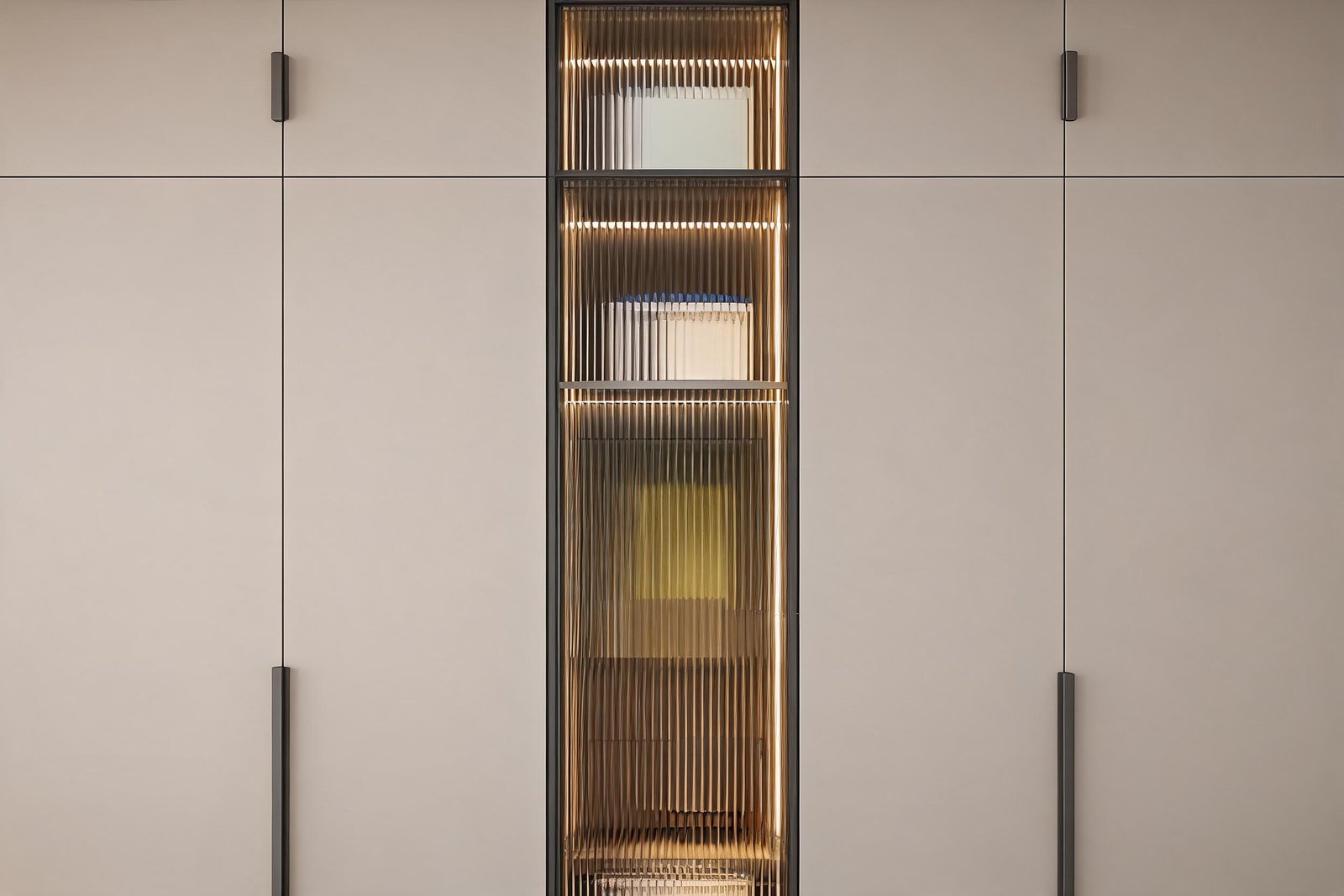
A fluted glass wardrobe is a closet with doors made of vertical-ridged (also called reeded or ribbed) glass that blurs what’s inside while letting light through. The ridges give you privacy without the heavy, boxed-in feeling solid doors create.
The idea isn’t new, but it took off hard in 2026. The “quiet luxury” look that interior publications keep covering leans on texture rather than loud hardware, and fluted glass delivers exactly that. Where clear glass shows every creased shirt and stray hanger, fluted glass turns the contents into soft color blocks. You get the light and the depth without living on display. Compared to a solid-door wardrobe, the room reads taller and calmer, which is why designers use the vertical lines to fake extra ceiling height.
Most people hunting for a glass wardrobe with lights for the bedroom end up here because they saw a styled photo and want that warm, editorial feel. The trick is matching the light temperature to the room. Cool 6000K strips look clinical next to bedside lamps, while a 3000K warm white blends in and turns the whole wardrobe into one soft light source instead of a display case. If your bedroom already leans warm and neutral, fluted glass with a warm LED strip is the lowest-effort way to get that custom built-in look without paying a carpenter.
Why LED lighting makes such a difference in a glass wardrobe
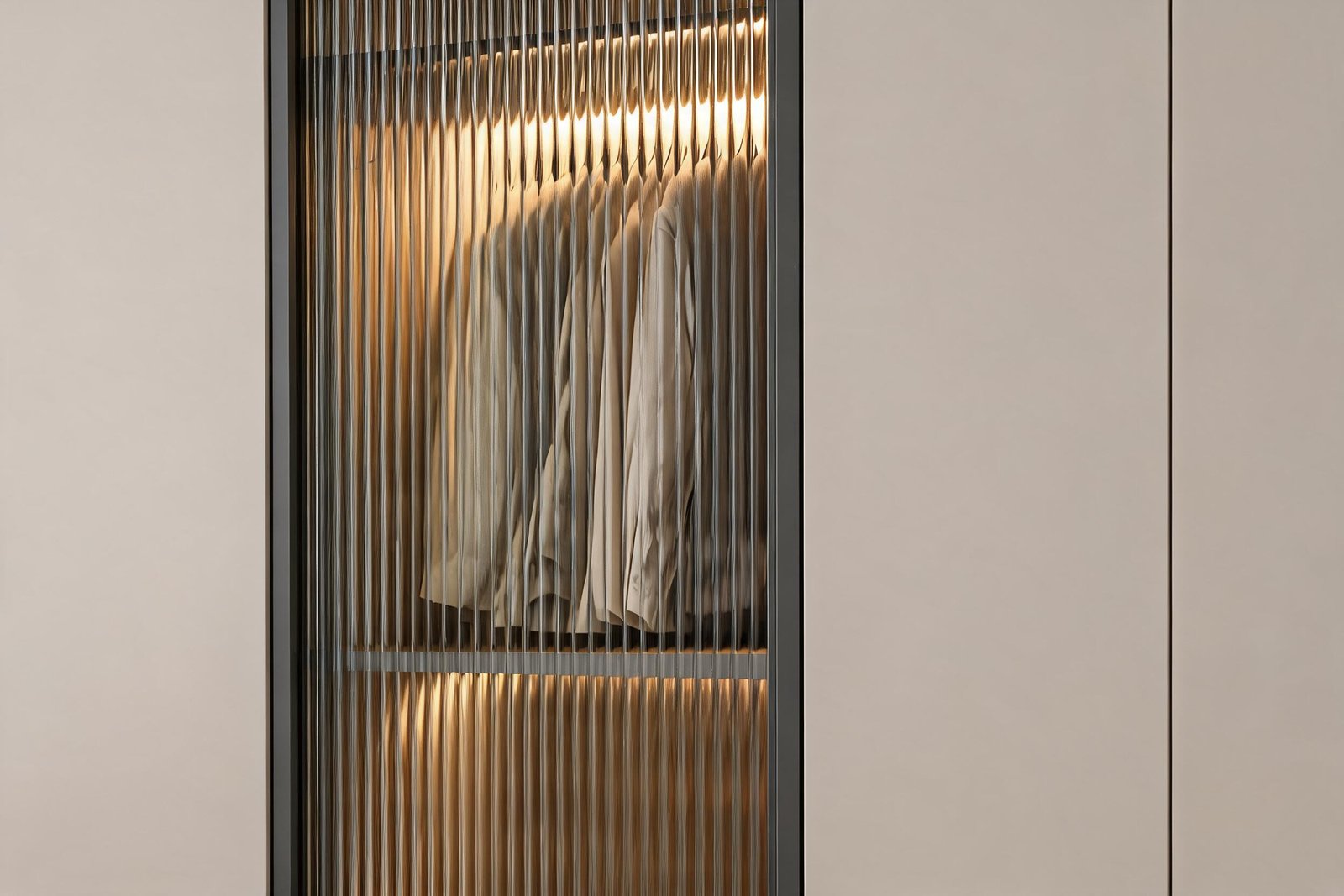
Built-in LED strips are the reason these wardrobes look expensive in person, because they light the shelves directly instead of relying on a ceiling fixture. The fluted glass then diffuses that light into a soft glow, so you get a gentle focal point rather than a glare.
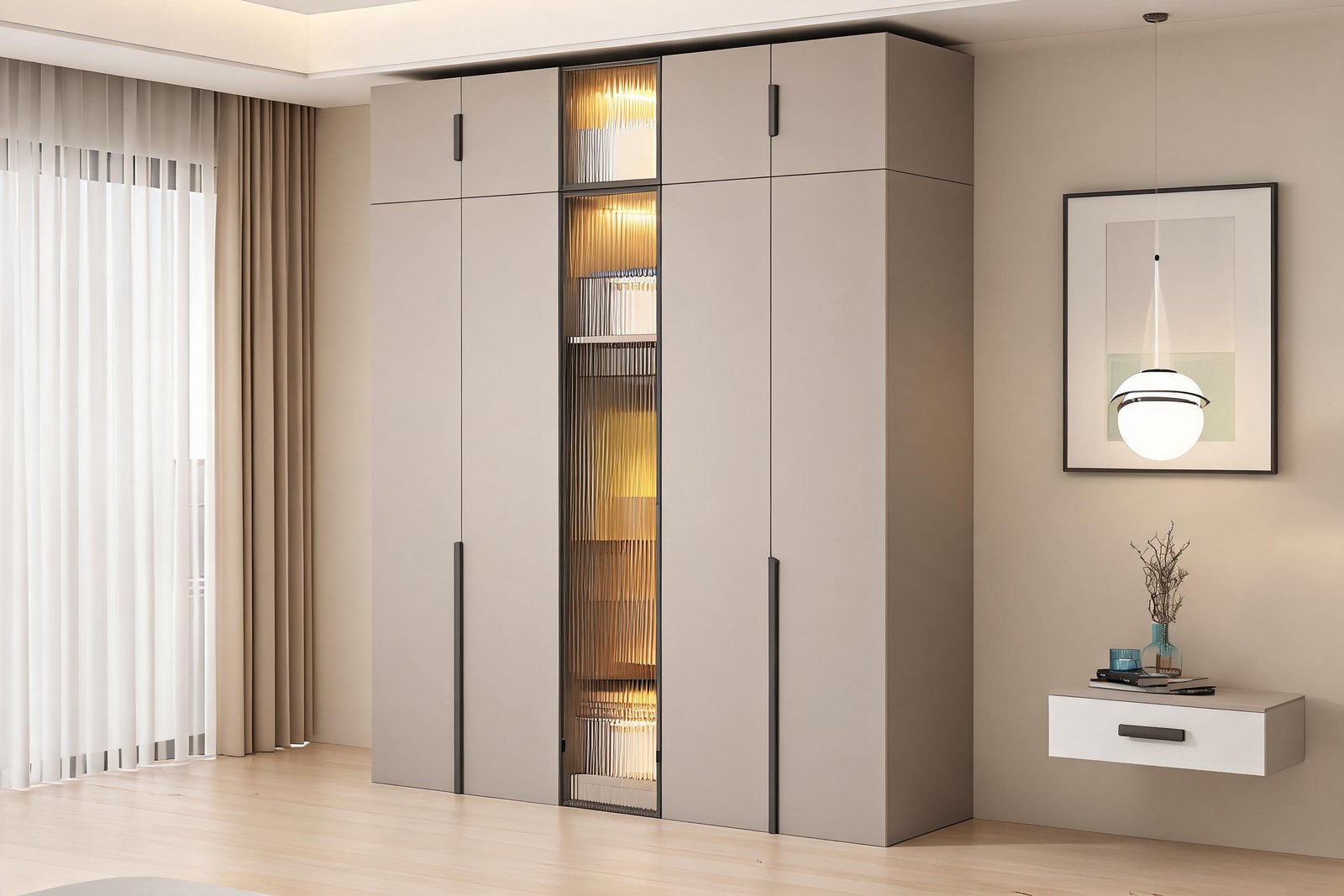
In a practical sense it also means you stop fumbling in the dark for a black sweater at 6 a.m. The warm 3000K tone my sister chose reads cozy in a bedroom, and the light sits under each shelf so it shines down on folded clothes instead of into your eyes. If you like the look, the fluted glass wardrobe we carry pairs the ribbed glass with integrated LED lighting and a floor-to-ceiling 94.5-inch frame, which is the version I’d pick for a master bedroom.
What should you check before buying a fluted glass wardrobe?
Three things separate a wardrobe you’ll keep for a decade from one that sags or smells like glue. First, the glass should be tempered and certified, not standard pane glass. Reeded glass looks delicate, but tempered panels hold up to daily use and won’t shatter into shards if a door gets knocked. Second, look for E0-grade board. This one gets skipped a lot, yet it matters most in a bedroom, since lower-grade panels off-gas into the air you breathe for eight hours a night. Third, soft-close hinges are non-negotiable if you wake up earlier than your partner. A slamming wardrobe door at 5:45 is a quick way to start an argument.
| Feature | What to look for | Why it matters |
|---|---|---|
| Glass | Tempered, 3C certified | Safety and durability |
| Panel | E0 / ENF grade board | Bedroom air quality |
| Hinges | Soft-close | Quiet daily use |
| Height | Floor-to-ceiling (79″ or 94.5″) | No dust-trap gap on top |
Is a fluted glass wardrobe right for a small bedroom?
For a small room, fluted glass is usually a better call than clear glass and often better than mirrored doors. The ribbed surface reflects light without the harsh full mirror effect, and the blurred contents keep a small space from looking busy. Mounted floor-to-ceiling, the vertical ridges draw the eye upward and make a low ceiling feel less pressing.
The honest trade-off is upkeep. You see the soft outline of everything inside, so the shelving needs to stay reasonably tidy, and the glass wants a wipe now and then to stay streak-free. If you’re the type who shoves things in and never folds, solid doors will forgive you more.
Frequently asked questions
Does fluted glass hide clothes completely?
No. It blurs the contents into soft color blocks, so shapes are visible but details are not. It’s privacy, not invisibility.
Can I get a fluted glass wardrobe in different widths?
Yes. Most are modular and come in a range of widths from roughly 80 cm up to 240 cm, with or without the glass door panels.
How do I clean fluted glass doors?
A soft microfiber cloth and a streak-free glass cleaner, wiping along the ridges. Avoid abrasive sponges that can scratch the surface.
Do fluted glass wardrobes come with LED lighting built in?
Some do, and some don’t. Models like the 94.5-inch version linked above integrate the LED strips into the cabinet so the glass section glows on its own, while budget units need a separate light kit. Check the spec if the lit look is what sold you.
If you’re planning a bedroom refresh, view the 94.5-inch fluted glass armoire in our store to see the full spec, or browse the whole wardrobe collection if you want a different width or a solid-door option.
Fluted Glass Wardrobe: Cleaning, Light and Layout
Fluted glass hides more than it reveals, which is the whole point of the profile. The vertical channels break up what sits behind the door, so folded stacks and hanging clothes read as soft texture rather than clutter. That makes a fluted glass wardrobe a good answer for a bedroom that has to look tidy without perfect folding.
Lighting is the trade-off. Fluted glass dims whatever is inside by roughly 20 to 30 percent, so an interior LED strip makes a real difference to how easy the wardrobe is to use at 6am. A 3000K strip under the top shelf lights the rail without glare.
Cleaning needs a soft cloth and a pH-neutral spray. Abrasive cream cleaners lodge in the grooves and dull the profile, and a dry cloth drags dust along the channels rather than lifting it. Work vertically along the flutes, then buff with a microfibre cloth, and the panel keeps its clarity for years.
For a wardrobe under about 120 square feet of room, a 220 cm fluted glass wardrobe at 60 cm depth gives full hanging without eating the walkway. Above that, a 40 cm depth works for folded storage and shows less of the room behind it.
