

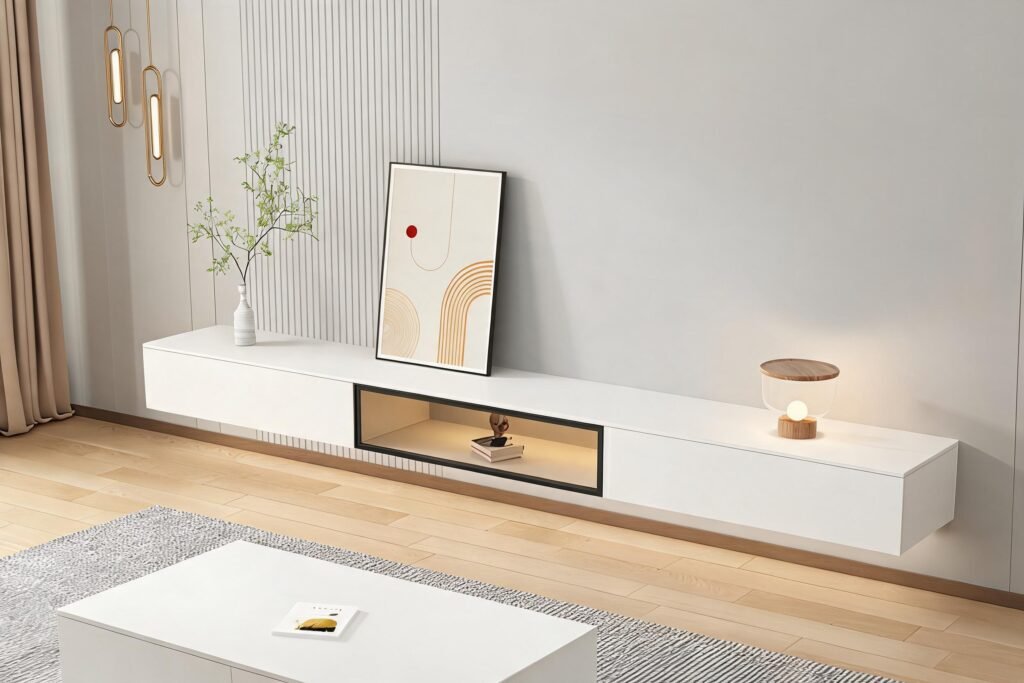
I’ve mounted three TVs in the last two apartments and lived with both styles, so I get this question a lot from friends who are about to redo a living room wall. The short version: a floating TV stand wins on looks and floor space, while a floor stand wins when you can’t drill or you want to rearrange often. The longer version depends on your wall, your TV size, and how much you hate visible cables.
What is the difference between a floating and a floor TV stand?
More background: Wikipedia — Float glass. More background: Wikipedia — Stainless steel. More background: Britannica — Wood.
Keep one principle in mind for floor tv stand: proportion beats decoration.
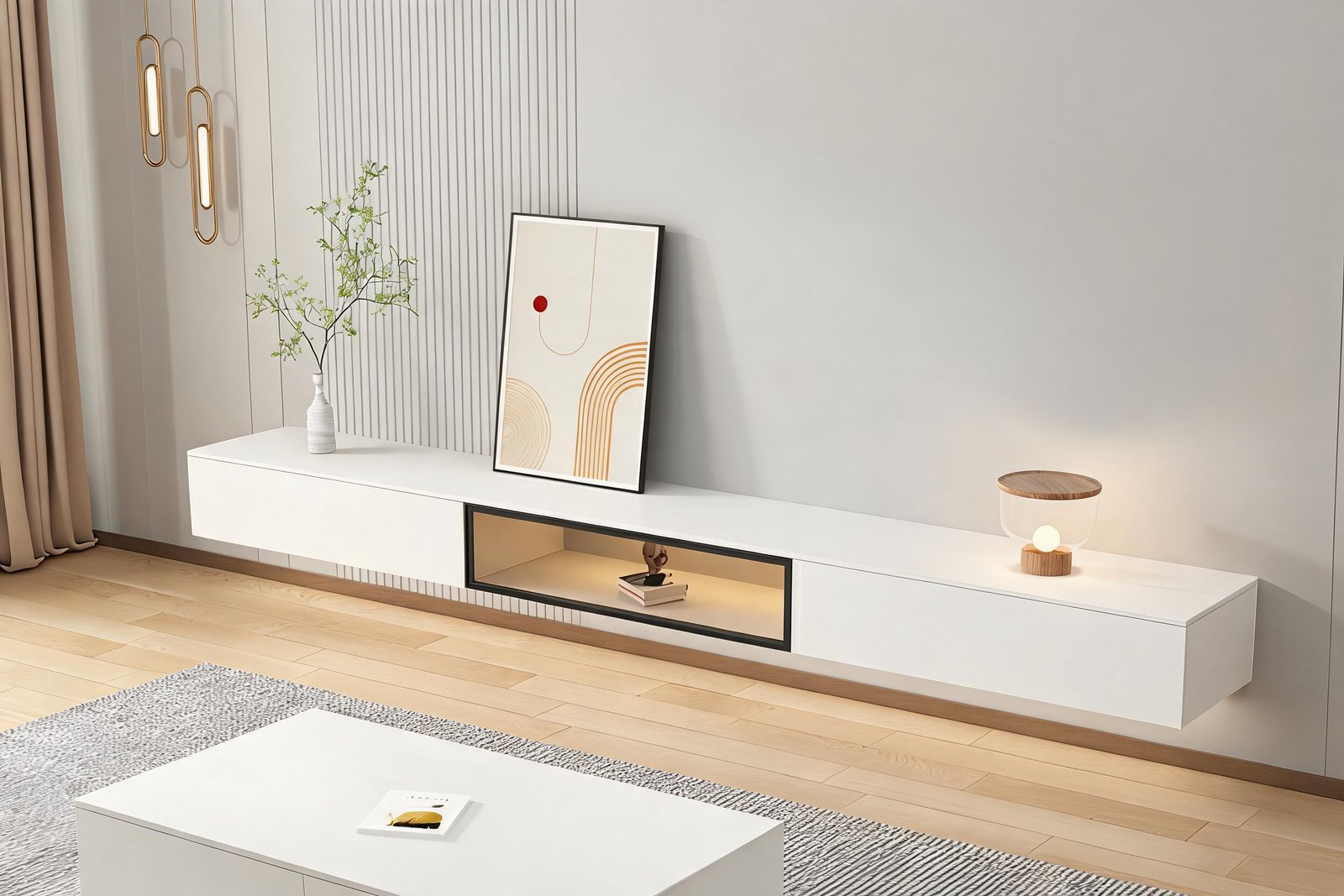
A floating TV stand mounts directly to the wall with no legs, leaving open space underneath, while a floor TV stand rests on legs or a base on the floor. Floating units create a lighter, built-in look; floor units are freestanding and easier to move.
That open gap under a floating console is the whole point. It makes a small living room feel less crowded, gives a robot vacuum a clear run, and lets you hide cables and a power strip behind the unit instead of draping them along the floor. The trade-off is that mounting takes real work and the right wall.
Is a floating TV stand safe for a 65-inch TV?
Our own rule for floor tv stand comes down to three checks.
Yes, provided it’s anchored into wall studs or a solid masonry wall with hardware rated for the combined weight of the console and the TV. A 65-inch set is well within the range of a properly installed floating stand; the failure point is almost always the anchor, not the stand.
Check the weight rating before you buy and be honest about your wall. Drywall alone with plastic anchors is not enough for a TV and console together. If you’re renting and can’t locate studs or aren’t allowed to drill, that’s a sign to lean toward a floor stand.
How high should you mount a floating TV stand?
What most floor tv stand guides skip is the measurement step.
Mount the console so the center of the TV screen sits roughly 42 inches from the floor, which is eye level for most adults seated on a sofa. The stand’s bottom edge usually lands 20 to 28 inches off the floor depending on your TV size and viewing distance.
The 42-inch rule has been around for years and still holds, but adjust for your own seating. Measure from the floor to your eyes while seated, then line up the screen’s center with that number. If you wall-mount the TV above the console instead of sitting it on top, leave enough gap for a soundbar and for reaching cables behind the set.
When does a floor TV stand make more sense?
The short answer on floor tv stand: match the piece to the space first, then to the look.
A floor stand is the better choice when you rent and can’t drill, when you like to reshuffle furniture, or when you’re setting up in a space you won’t stay in long. It also avoids any wall-anchoring anxiety with very large or heavy setups.
Honestly, floor stands got a lot more attractive over the last few years. The best ones now come with the same glass doors and integrated LED lighting that used to be reserved for built-ins, so you don’t sacrifice the premium look just because you can’t mount anything. The trade is the floor gap collects dust and the room can feel a touch heavier.
What should you look for in a floating TV stand with LED?
If you are researching floor tv stand, start with the points below.
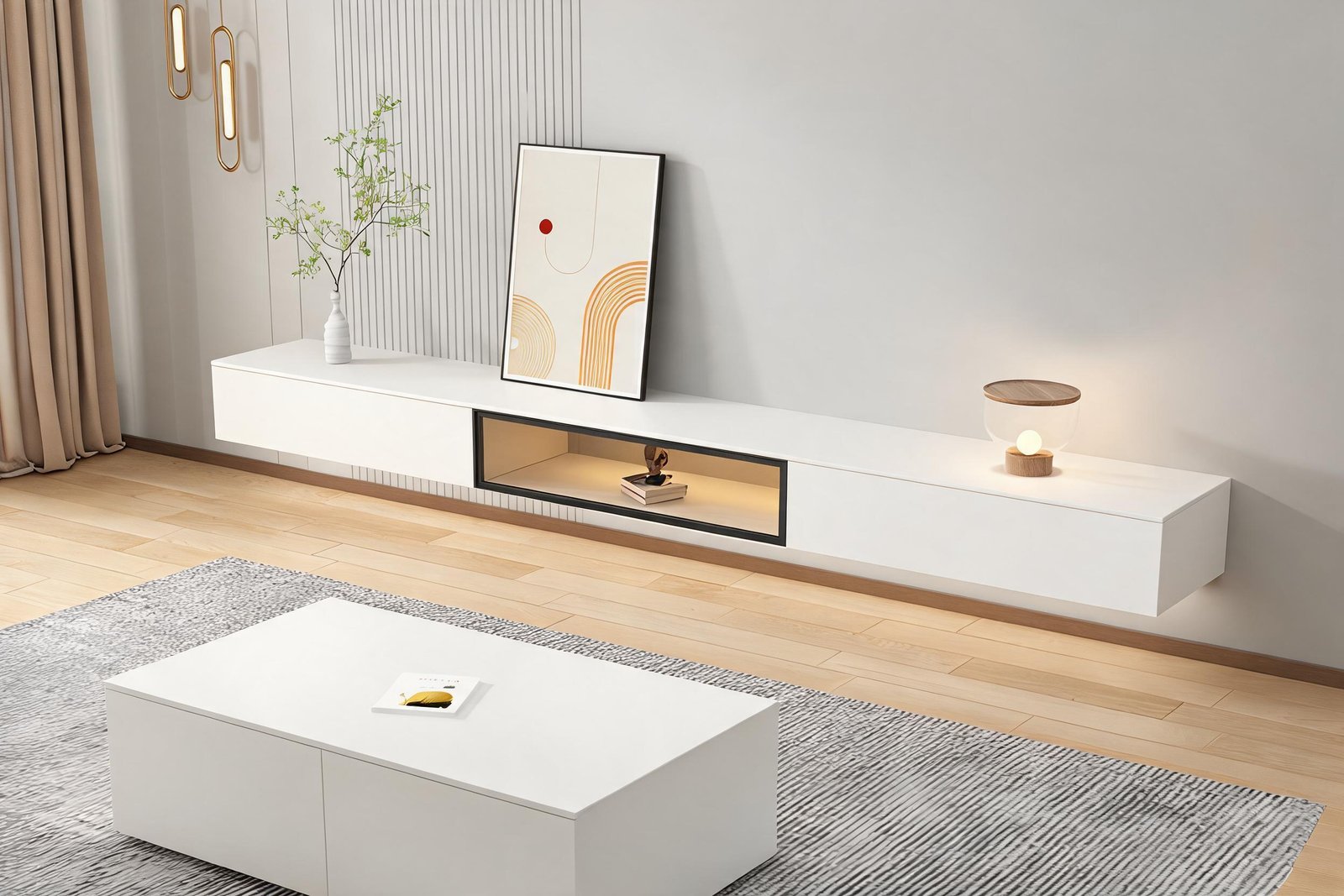
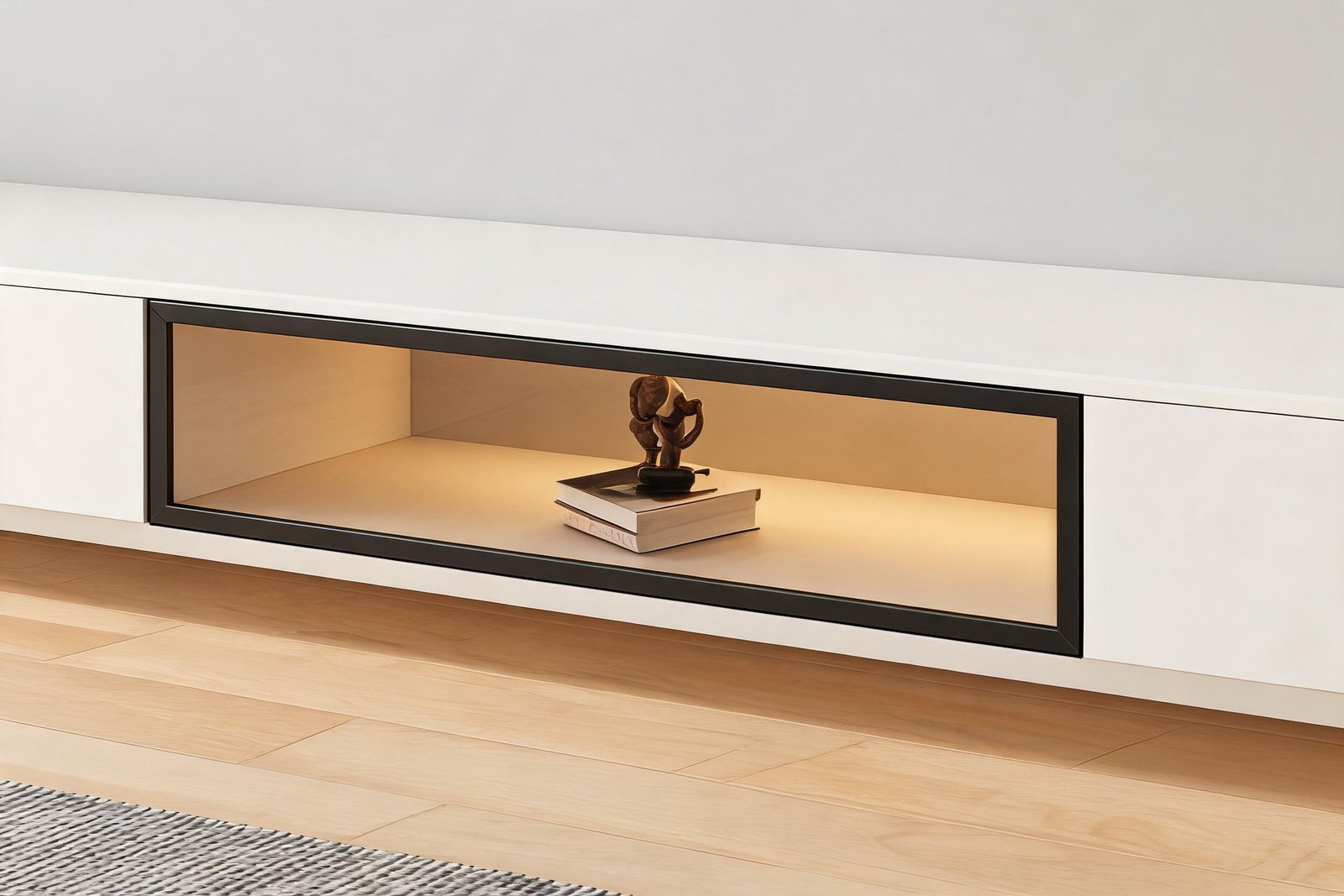
Look for tempered glass doors to keep dust off your gear, warm LED strip lighting you can actually see rather than a faint glow, and closed storage for the mess of cables, remotes, and game controllers.
The LED isn’t just decoration. A soft light behind a glass-fronted cabinet turns your media wall into a focal point in the evening, and it’s genuinely useful for finding a cable without flipping on the big light. For a ready example, the floating glass door TV stand we stock is a 94-inch wall-mounted console with tempered glass doors, LED lighting, and closed drawers on both ends, sized for TVs up to the large end of the range.
One thing people overlook when comparing the two is lighting. A floating console with a glass front and a warm LED strip under the top edge does more for a room than most accent lamps, because it draws the eye across the wall instead of down at the floor. A floor stand can pull off the same effect, but the light sits closer to eye level and reads less like architecture and more like a lit cabinet. If the mood-lit media wall is what you’re after, the wall-mounted route gets you there with less effort.
Frequently asked questions
If you are researching floor tv stand, start with the points below.
Can a floating TV stand hold a soundbar?
Yes. Most have a flat top surface wide enough for a soundbar, and the open space underneath leaves room to route its cables cleanly.
The most useful floor tv stand advice is about order of decisions.
Do floating TV stands come with cable management?
Usually they include cutouts or a gap at the back. The real benefit is hiding a power strip in the open space under the unit.
A quick note on floor tv stand before the details.
What width TV stand do I need for my TV?
The console should be at least as wide as the TV, and ideally a few inches wider on each side for balance and safe placement.
In practice, floor tv stand works best when you decide the layout before the finish.
Whether you go floating or floor comes down to your wall and how often you move. If you can drill and want the cleanest, most built-in look, see the floating TV stand price and details here. If you’d rather keep your options open, browse the full TV stand collection for freestanding alternatives.
