

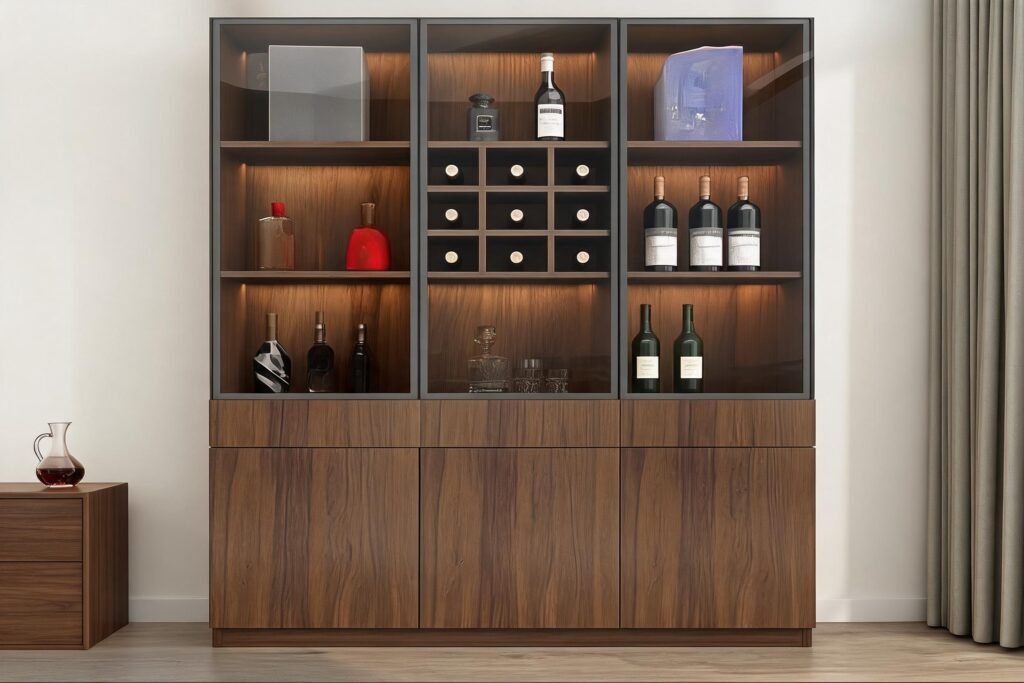
Wine Cabinet with LED Lighting: How to Plan a Home Bar
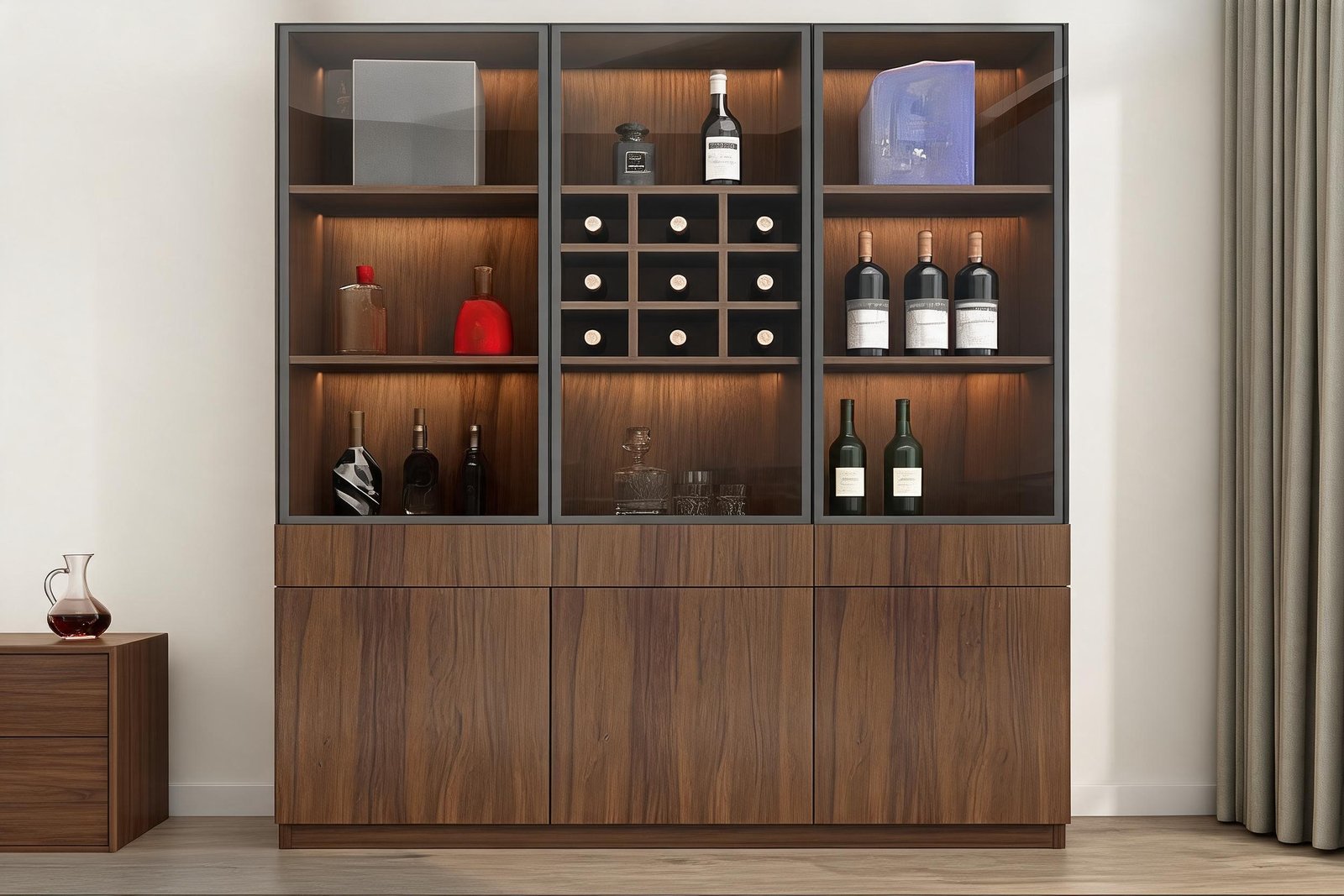
The first wine cabinet I put in our dining room was a mistake I did not see coming. It looked great in the showroom photo, arrived in a flat box, and once assembled sat there like a filing cabinet with bottles in it. No light, wrong width, and one bottle of Rioja standing in a sea of empty shelf. The cabinet we have now does the opposite: warm wood, glass front, warm LED behind every shelf, and it changed where people stand at parties.
Here is what I learned planning that second cabinet, including the parts the product listings skip. The cabinet I settled on is the wood grain JX-WC-037, and you can check its price and sizes here.
Wine Cabinet With Led Lighting: What does LED lighting actually add to a wine cabinet?
More background: Wikipedia — Cabinetry. More background: Wikipedia — Bar (establishment). More background: Wikipedia — Wine cellar.
The most useful wine cabinet with led lighting advice is about order of decisions.
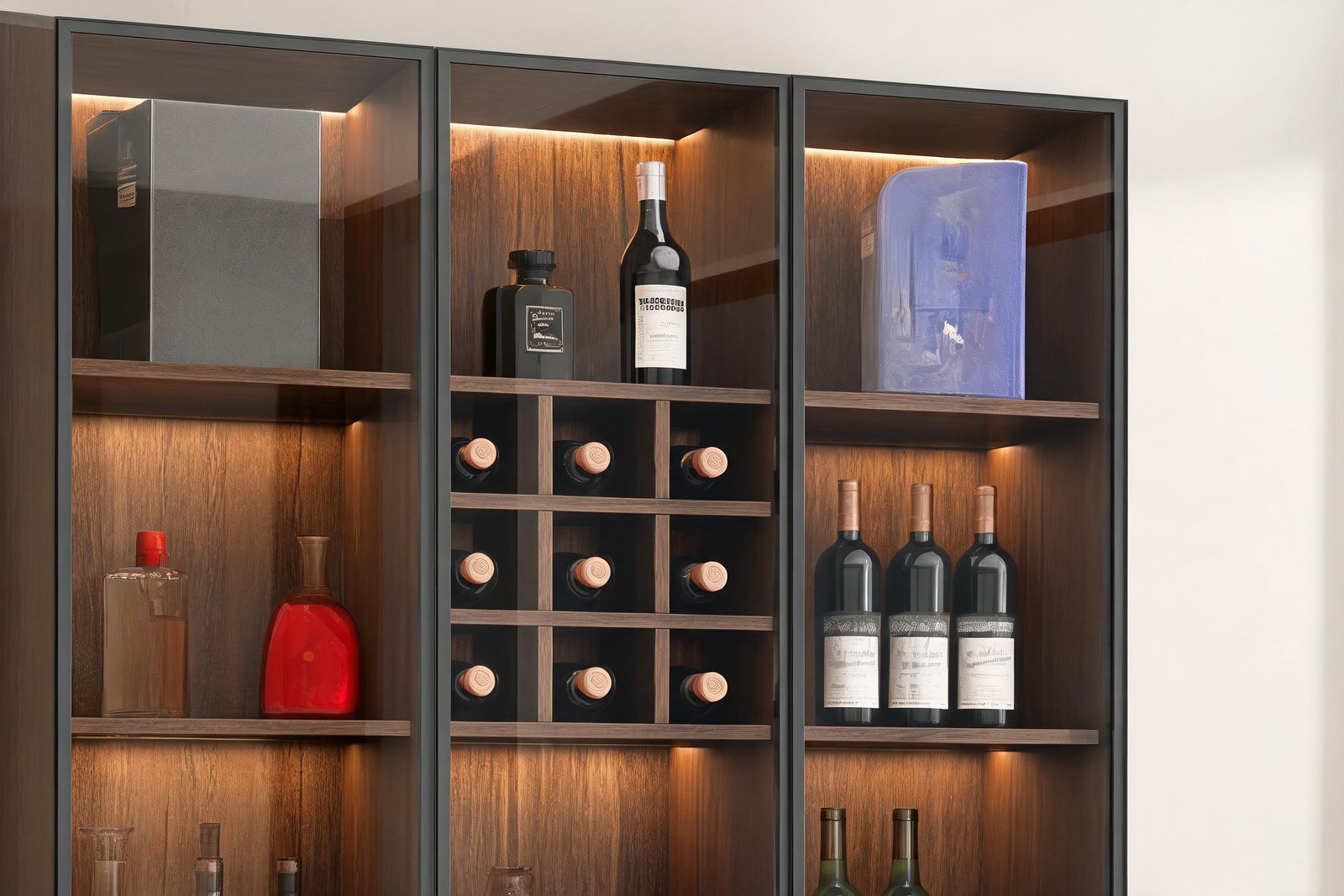
Interior LED lighting turns a storage box into a display piece: it backlights bottle labels and glassware, adds warm depth to the room after dark, and makes the cabinet a light source instead of dark furniture. It is atmosphere first, function second.
That order matters, because it tells you what to look for. Low-heat, recessed LED strips that sit under each shelf and wash the wood back panel will flatter labels and ice buckets without glaring off the glass. Cheap strips taped to the front edge do the opposite: you see the strip, not the bottle. Look at the glow angle before you look at the colour, and make sure the light runs warm (2700K to 3000K). Cool white inside a wood cabinet reads like a hotel mini-bar.
How do you choose the right wine cabinet size for your wall?
A quick note on wine cabinet with led lighting before the details.
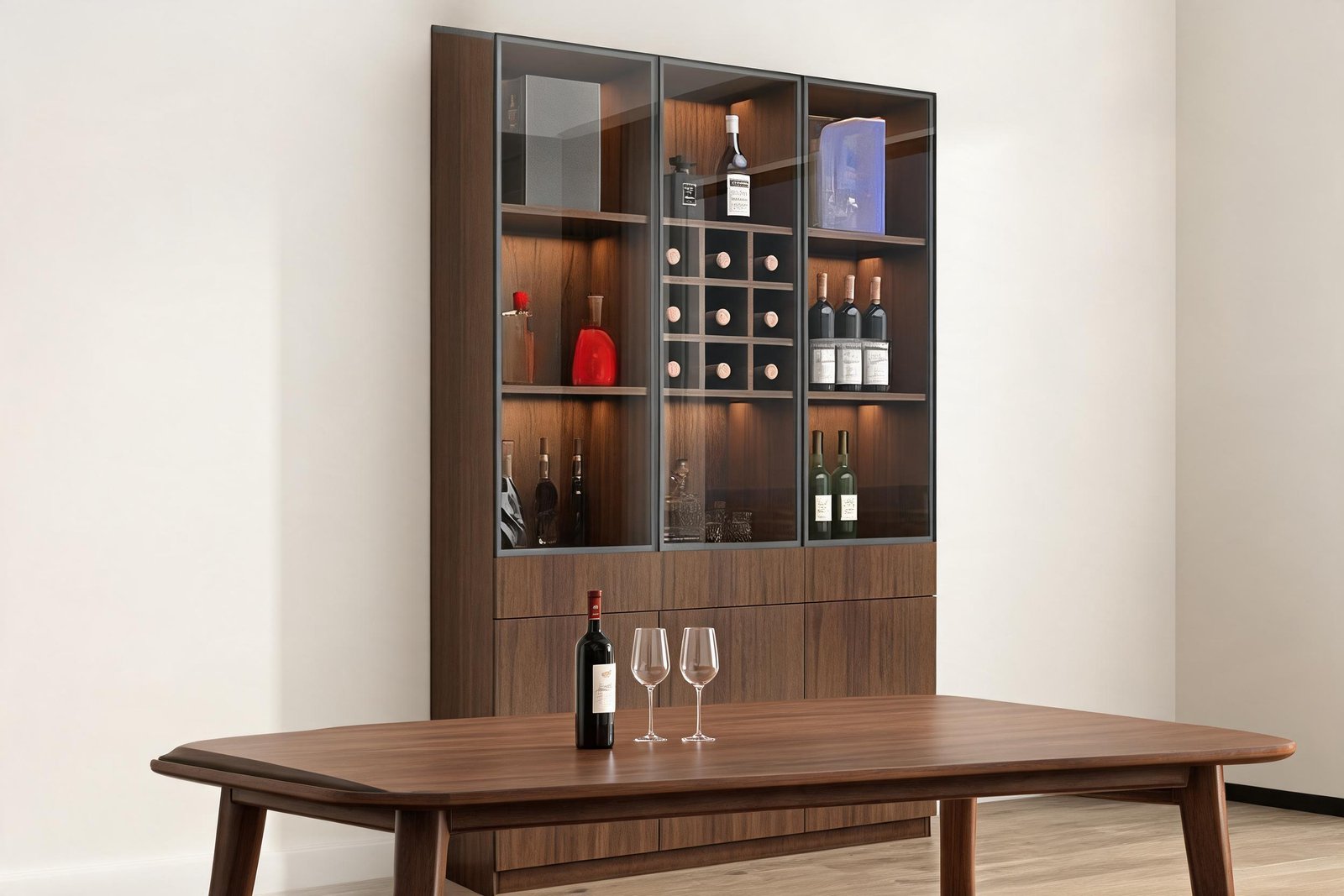
Measure the wall, subtract the gaps you want at each end, then choose a width that fits the collection you will have in two years, not the six bottles you own today. Modular widths exist for exactly this reason.
The wood grain wine cabinet Apexera stocks comes in ten configurations from 80 cm to 240 cm wide and 200 cm or 240 cm tall, all 40 cm deep, so you can scale from a narrow dining room nook up to a full bar wall without changing the finish.
| Width | Height | Best for |
|---|---|---|
| 80 cm | 200 / 240 cm | Apartments, wine for two, narrow galley walls |
| 120 cm | 200 / 240 cm | Most dining rooms, 30 to 60 bottles plus glassware |
| 160 cm | 200 / 240 cm | Entertaining rooms, decanter and tumbler storage |
| 200 cm | 200 / 240 cm | Open-plan kitchens, doubles as a room divider |
| 240 cm | 200 / 240 cm | Full bar walls, two-zone serving and storage |
Two measurements people forget. First, the depth: 40 cm is deeper than a sideboard, so it eats floor space in a narrow passage. Second, the ceiling: a 240 cm cabinet plus lampshade and cornice is a real failure mode in older houses with 8-foot ceilings. Check both before you order, and leave 5 cm of breathing room on each side so doors open without knocking the wall.
Wood grain or black gloss: which finish works in a dining room?
In practice, wine cabinet with led lighting works best when you decide the layout before the finish.
Warm wood grain for dining and living rooms, gloss black only if the rest of the room is already high contrast. Wood finishes hide fingerprints, dust and the dust lines around bottle bases, and they let the LED glow read as warm rather than as a screen.
This is the part I would argue hardest about. Gloss finishes photograph beautifully and then spend their whole life being wiped. Warm wood sits back and lets the bottles be the bright thing. It also means the cabinet still looks like furniture when the LED is off during the day, which matters more than the marketing photos suggest.
Do glass doors protect wine, or only look good?
Keep one principle in mind for wine cabinet with led lighting: proportion beats decoration.
They do a bit of both, with limits. Glass doors keep dust, humidity swings and curious hands off the bottles, but a glass-front cabinet is a display piece, not a cellar.
If your wine is for drinking in the next few months, a lit display cabinet is ideal: bottles standing up, labels visible, no fuss. If you are laying wine down for five years, buy a dark, vibration-free cellar at a steady 13 degrees Celsius and keep the pretty cabinet for what you are serving. Ultraviolet light degrades wine over time, so keep the LED on when guests are around and off when they are not. Nobody sells you that sentence, so keep it in mind.
What is driving home bar cabinets in 2026?
Our own rule for wine cabinet with led lighting comes down to three checks.
Two things, according to current market data. Lighting, and modularity. Accio’s 2026 home bar cabinet research found a 67-inch tall modern wine bar cabinet with RGB LED lighting and a charging station moving close to 28,000 units in a single month, with colour-changing LED as the hero feature, while corner LED cabinets are flagged as high momentum because they solve tight apartment footprints.
The listing round-ups tell the same story from the other direction. Roundups of the best home bar cabinets with wine racks and LED published in April 2026 and the best liquor cabinets published in September 2026 both lead with lighting, storage layout and build quality, and both give their editor’s choice spots to cabinets where the lighting is integrated rather than bolted on.
What I think the data undersells is restraint. RGB party lighting sells because it photographs well on video. Warm single-temperature lighting is what you actually want in a dining room at 9 pm. That is the gap our wood grain wine cabinet is built for: warm LED behind glass, real wood grain, and ten widths so it fits the wall you have instead of the wall in the ad. If you are still deciding between a lit glass cabinet and an open shelf display, my notes on the glass display cabinet with LED cover that comparison.
How do you style a liquor cabinet so it does not look like a bar cart?
What most wine cabinet with led lighting guides skip is the measurement step.
Work in threes, keep one shelf deliberately sparse, and store glassware on the shelf that gets the most light. Then stop.
Specifically: group bottles in odd numbers with the tallest in the middle, put one decorative object per shelf maximum if the shelf is behind glass, and leave one bay nearly empty so the eye has somewhere to rest. Turn the bottle labels forward. Keep the serving pieces, decanter, ice bucket, mixing glass, on the tier that catches the LED directly, because that tier is the one guests see when the door opens. Everything else can be practical.
What should you check before buying?
The short answer on wine cabinet with led lighting: match the piece to the space first, then to the look.
Check the material quality, the hardware and the assembly, in that order.
Engineered wood with a wood grain veneer is normal at this price band and it is stable, but it is not solid oak, so do not buy it expecting to sand and refinish it in ten years. Drawers should run on proper tracks rather than bare wood slots. The cabinet I use runs MDF drawer tracks and arrives pre-drilled for partial assembly, which is standard for this category, and I would rather say that than pretend otherwise. If you are buying a tall unit, anchor it to the wall.
Frequently asked questions
If you are researching wine cabinet with led lighting, start with the points below.
Is LED lighting bad for wine?
Warm low-heat LED is the safest option for a display cabinet. The real risks to wine are heat and ultraviolet light, not light in general, so choose warm LED, avoid direct sunlight, and switch the lighting off when you are not around.
A quick note on wine cabinet with led lighting before the details.
Can I put a wine cabinet in a dining room?
In practice, wine cabinet with led lighting works best when you decide the layout before the finish.
Yes, and it is the best place for one. A dining room keeps the cabinet near where you serve, and the LED glow works as evening lighting without a floor lamp.
Keep one principle in mind for wine cabinet with led lighting: proportion beats decoration.
How many bottles does a 120 cm wine cabinet hold?
Our own rule for wine cabinet with led lighting comes down to three checks.
It depends on layout rather than width alone. A 120 cm glass-front cabinet with mixed shelving and one bottle rack typically holds 30 to 60 bottles plus glassware, with the rest of the space given to decanters, bar tools and display.
What most wine cabinet with led lighting guides skip is the measurement step.
Do I need to lay bottles flat in a display cabinet?
The short answer on wine cabinet with led lighting: match the piece to the space first, then to the look.
Only for wine you plan to age. Bottles you will drink within a few months can stand upright, which keeps corks and labels visible. For anything resting over a year, keep it in a proper dark cellar.
If you are researching wine cabinet with led lighting, start with the points below.
If your dining room has a plain wall, a lamp that is doing lighting duty and a growing pile of bottles in the kitchen, a warm-lit cabinet will fix more than it costs. See the wood grain wine cabinet price and sizes here for all ten modular configurations, or browse the full display cabinets and wine cabinets collection to compare finishes before you commit to a wall.
n
