

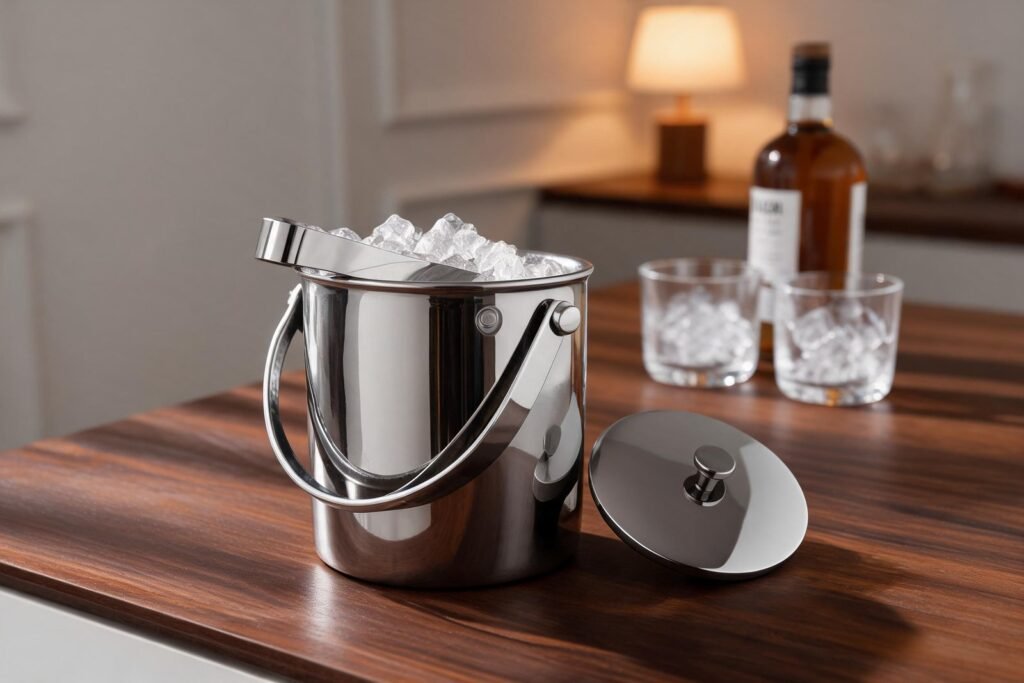
How to Keep Ice From Melting in an Ice Bucket (2026 Guide)
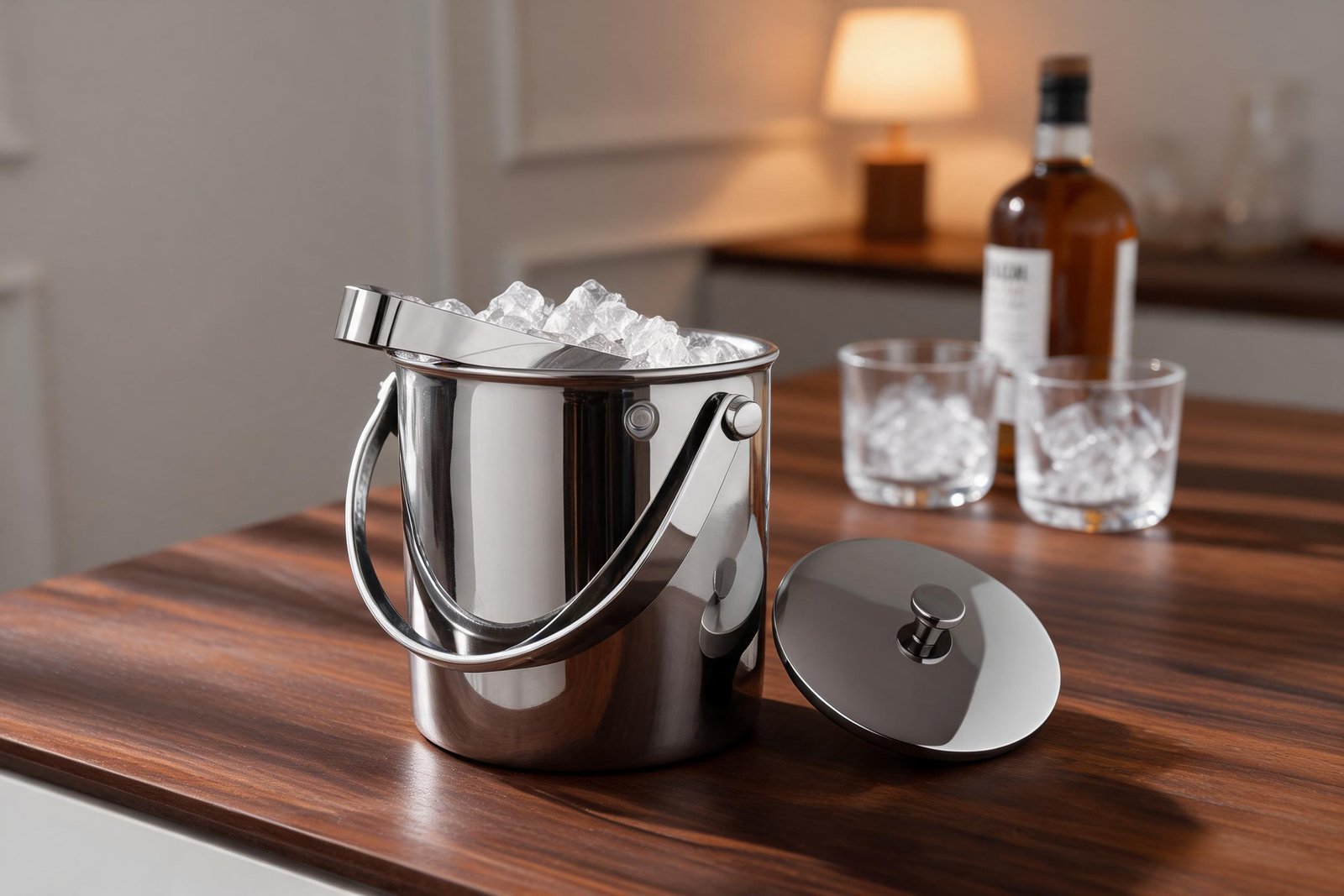
I learned this one the annoying way. Two summers ago I filled a steel bucket with ice at seven in the evening and by dessert it was a puddle with three sad cubes floating in it, while nine people drank lukewarm gin and tonics and politely said nothing.
So I read up on how ice actually behaves and tested a few buckets over two summers. The conclusion surprised me: melting has less to do with how expensive the bucket is and more to do with four things, in this order. What touches the ice. Whether the wall is insulated. How much air moves across the top. And how the ice was shaped before it ever went in.
How To Keep Ice From Melting: Why does ice melt so fast in a normal ice bucket?
More background: Wikipedia — Stainless steel. More background: Britannica — Wood. More background: Wikipedia — Ice.
If you are researching how to keep ice from melting, start with the points below.
Ice melts when heat reaches it, and an ordinary single-wall bucket lets heat in three ways at once: meltwater pools around the cubes, room-temperature steel conducts heat straight through the wall, and open air keeps circulating over the top. Drain the water, insulate the wall, and close the lid, and you slow all three.
Here is the detail that changed how I use a bucket. Water conducts heat roughly 23 times faster than air (about 0.6 watts per meter-kelvin against 0.026 for still air). So ice sitting in its own meltwater is in constant contact with a very fast heat path. That is why draining matters more than most people think, and why a bucket that never gets drained burns through a full load in about two hours no matter how good the steel is.
How long does ice last in an ice bucket?
The most useful how to keep ice from melting advice is about order of decisions.
Roughly one to two hours in an open single-wall bucket at room temperature, and six to ten hours in a lidded double-wall vacuum bucket that is drained now and then. The biggest single gain is a lid, not thicker steel.
These are my own numbers from a 21 degrees Celsius living room, using two-inch cubes and filling the bucket to the top.
| Setup | Usable ice |
|---|---|
| Open single-wall bucket, full | 1 to 2 hours |
| Single-wall bucket, drained hourly | 2 to 3 hours |
| Lidded single-wall bucket | 3 to 4 hours |
| Double-wall vacuum bucket, lid on | 6 to 10 hours |
| Double-wall vacuum, pre-chilled, out of any sun | 10 to 12 hours and beyond |
The pattern is consistent: each fix (lid, then vacuum wall, then pre-chilling) adds hours, and none of them is expensive once you own the bucket. If you want to see the version built around the vacuum wall, view the Steel Ice Bucket SS-132 and its spec sheet here.
Does a double wall vacuum ice bucket really work?
A quick note on how to keep ice from melting before the details.
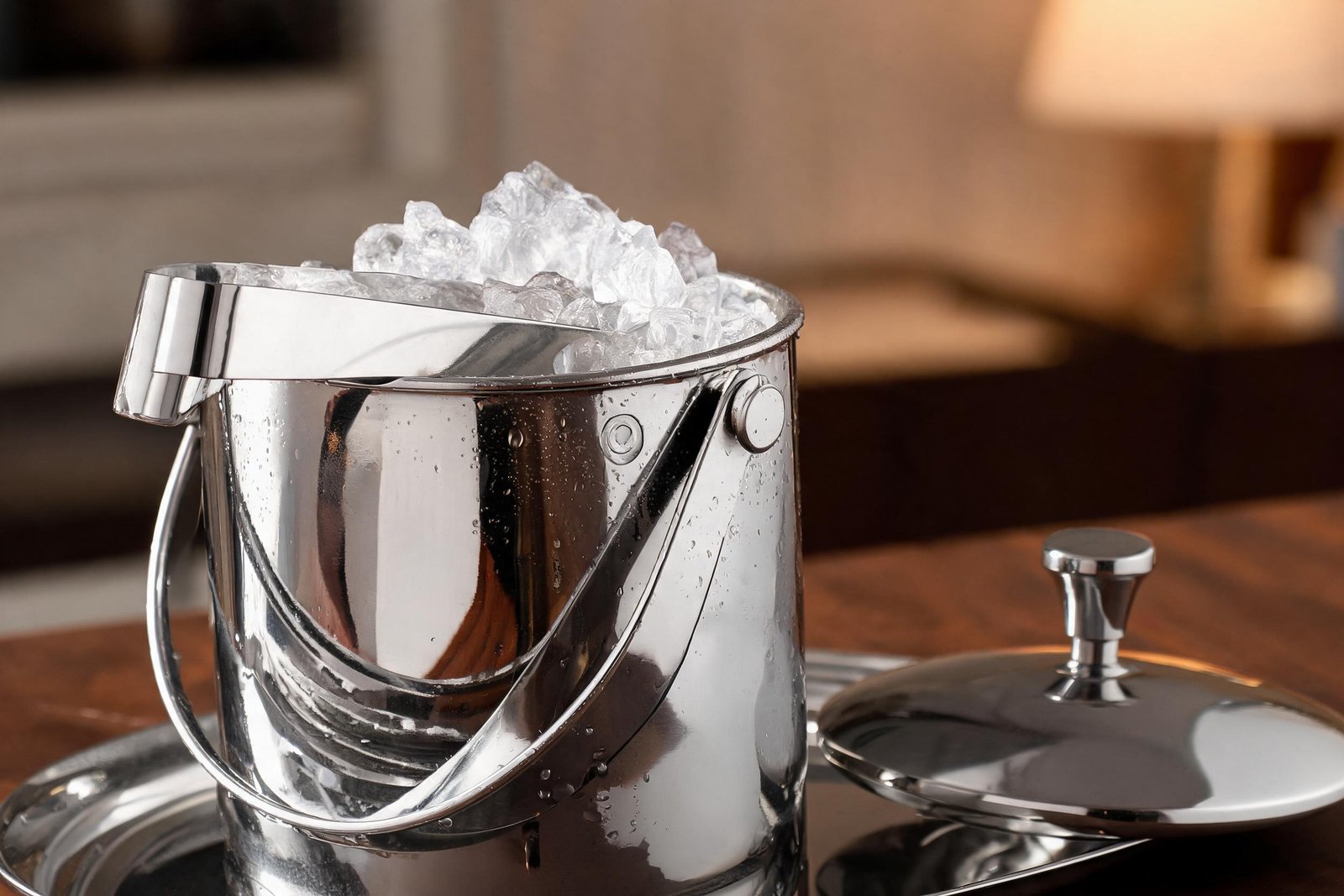
Yes, and the physics is not marketing. A vacuum gap has almost nothing inside it, so there is nothing to conduct heat across and nothing to convect. That removes the wall as a heat path completely.
What insulation cannot do is stop heat arriving from anywhere else. It cannot stop the open top, and it cannot stop the ice conducting heat into itself from the cubes above it. A vacuum bucket left lidless all evening performs far worse than its owner expects, and I have watched exactly that happen at a friend’s house. Think of the vacuum wall as half the job and the lid as the other half.
What is the fastest way to chill drinks without watering them down?
In practice, how to keep ice from melting works best when you decide the layout before the finish.
Use a salt water bath, in a separate container, and never on the ice you plan to serve. Three parts ice to one part coarse salt with a splash of water drops the bath to about minus 6 degrees Celsius, and more salt pushes it lower still. A bottle of wine that normally needs 40 minutes in the fridge will be cold in 10.
The salt does not make ice last longer. It does the opposite: it melts the ice faster, which is exactly why the bath gets so cold. Salted meltwater also tastes awful, so keep the bath for bottles and keep your serving ice in the bucket.
Two smaller tricks that work as well as any gadget: chill the glasses in the freezer for 10 minutes, and chill the bottle in the bath rather than pouring a warm drink over the ice. Warm liquid is what kills a glass of ice, not warm air.
Which ice shape actually lasts longest?
Keep one principle in mind for how to keep ice from melting: proportion beats decoration.
Bigger ice melts slower because there is less surface per unit of volume. For a cube of side length s, the surface-to-volume ratio is 6 divided by s, which means doubling the cube size halves the relative surface area. A two-inch cube is not slightly better than a one-inch cube. It is twice as efficient.
In practice, from best to worst:
- Two-inch cubes, especially clear ones, last longest and water a drink down slowest.
- Spheres offer the least surface for their volume, and they look better in a bucket.
- Crescent or half-moon ice from a fridge dispenser sits in the middle, and packs tightly.
- Crushed ice melts fastest. It is a display and tiki-drink material, not a long-haul option.
If you make cubes at home, boil the water twice and let it cool before freezing. The clearer the ice, the slower it melts, because trapped air is what makes cloudy ice collapse early.
How do you prep an ice bucket so the first hour is not wasted?
Our own rule for how to keep ice from melting comes down to three checks.
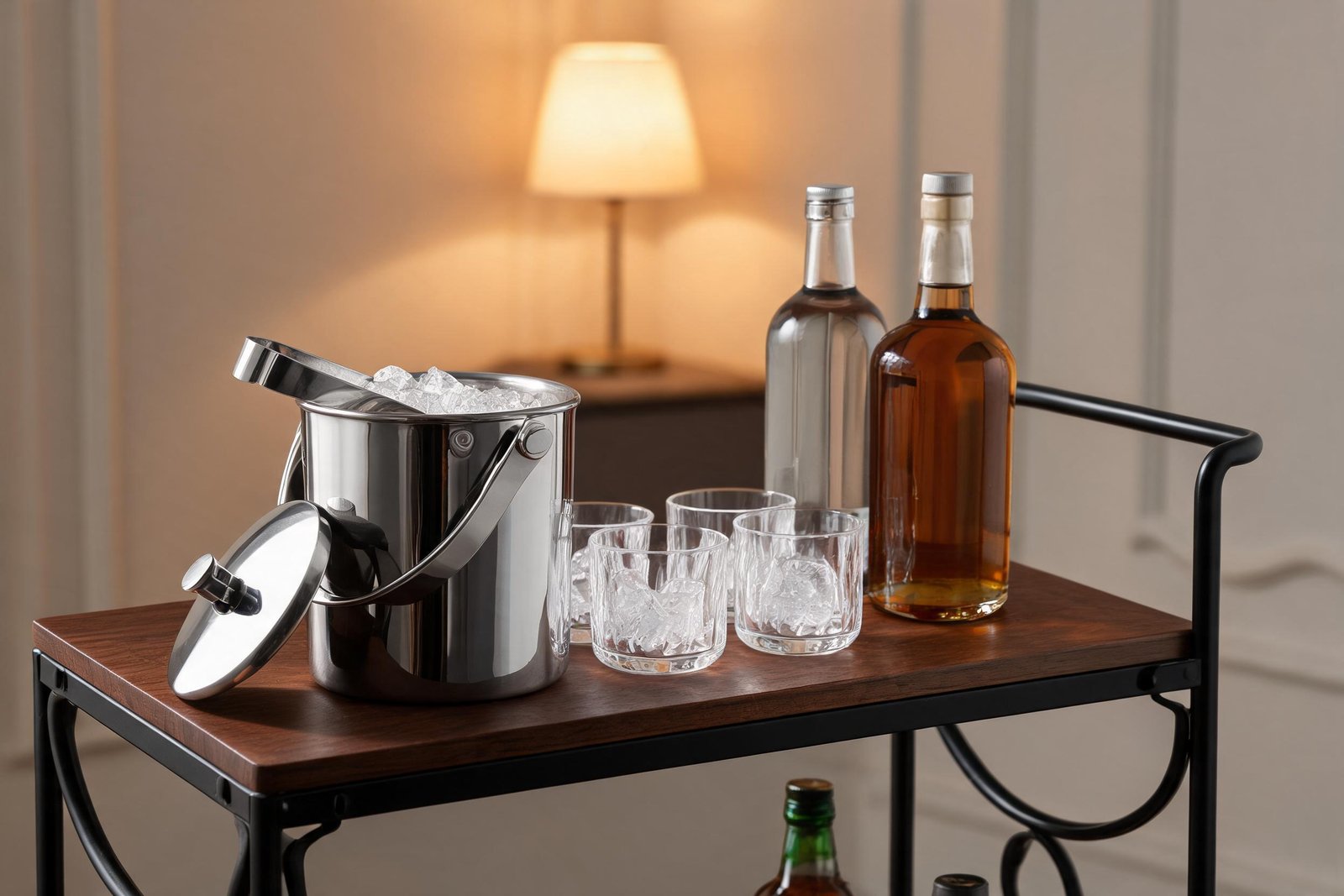
A five-minute setup buys you two extra hours. What I do now, in order:
- Fill the bucket with cold water and a handful of ice, swirl it for two minutes, then tip it out. A cold bucket stops stealing chill from your first load.
- Dry the inside so the first cubes are not sitting in a film of water.
- Fill it to the top. A half-full bucket has more air space, and air is warm.
- Put the lid back between rounds instead of leaving it off for the evening.
- Move it off hot surfaces: not beside the grill, not under a spotlight, not on a sunny window ledge.
- Drain the meltwater roughly hourly. This is the one step people skip and the one that matters most.
Two honest caveats. Do not put a sealed vacuum bucket in the freezer, because all you will chill is the outer wall. And a mirror-polished bucket shows every fingerprint, so keep a cloth nearby if guests are helping themselves.
Do the finish and the handles actually matter?
What most how to keep ice from melting guides skip is the measurement step.
A mirror finish reflects radiant heat instead of absorbing it, so it helps a little, and it will not stain the way a brushed or painted surface can. But be clear about the size of that effect: it is small next to the vacuum wall and the lid. Most of what you pay for in a polished bucket is that it looks right on the counter and does not corrode.
Handles matter more than they get credit for. A single arc handle over the top, like the one on the SS-132, lets you carry a full, heavy bucket one-handed without tipping it, which sounds trivial until you are carrying nine pounds of ice and glassware across a room.
Is an expensive ice bucket worth it?
The short answer on how to keep ice from melting: match the piece to the space first, then to the look.
It depends what you are buying it for, and I would rather say that plainly. In the market data I looked at for July 2026, the top 50 ice bucket listings on Amazon sold about 63,850 units for around $1.43 million, and the volume leader sits near $11. Almost all of that volume is cheap buckets and silicone trays. We are nowhere near that band: see the Steel Ice Bucket SS-132 price and details and you will find it at $293, sitting with the gift and hospitality tier occupied by brands like S’well and the better Crate & Barrel barware.
So the honest split. If you host twice a year and store the bucket in a cupboard, buy the $20 one and put the rest of the money into glassware. If barware lives on your counter and you use it most weekends, a vacuum wall, a lid and a mirror finish hold up for years, and the bucket becomes the thing you hand a guest without apologizing for it. Browse the full stainless steel home bar collection if you want to see how the ice bucket, tongs and trays sit together as a set.
Frequently asked questions
What most how to keep ice from melting guides skip is the measurement step.
If you are researching how to keep ice from melting, start with the points below.
The short answer on how to keep ice from melting: match the piece to the space first, then to the look.
How long does ice last in an ice bucket?
If you are researching how to keep ice from melting, start with the points below.
One to two hours in an open single-wall bucket at room temperature, and six to ten hours in a lidded double-wall vacuum bucket that gets drained occasionally. Pre-chilling the bucket and keeping it out of direct sun pushes that past ten hours.
The most useful how to keep ice from melting advice is about order of decisions.
Does salt make ice last longer?
A quick note on how to keep ice from melting before the details.
No. Salt lowers the temperature of the bath, which chills bottles faster, and it also melts the ice faster. Never salt the ice you are serving: the meltwater turns salty and unpleasant.
In practice, how to keep ice from melting works best when you decide the layout before the finish.
Do I need a lid on my ice bucket?
Keep one principle in mind for how to keep ice from melting: proportion beats decoration.
Yes. The lid stops warm air moving across the ice, and on a well-insulated bucket it saves as much ice as the vacuum wall does. Leaving it off all evening undoes most of what you paid for.
Our own rule for how to keep ice from melting comes down to three checks.
Can I keep an ice bucket in the freezer?
What most how to keep ice from melting guides skip is the measurement step.
You can chill a single-wall bucket in the freezer and it helps. A sealed double-wall vacuum bucket is a different case, because the freezer only chills the outer wall while the ice inside stays in its own insulated pocket. Chilling it with ice water for two minutes works better.
The short answer on how to keep ice from melting: match the piece to the space first, then to the look.
Ice is cheap and expectations are not. Fix the water, the wall and the air, fill the thing to the top, and nobody at your table will ever think about their drink again, which is the whole point.
n
