

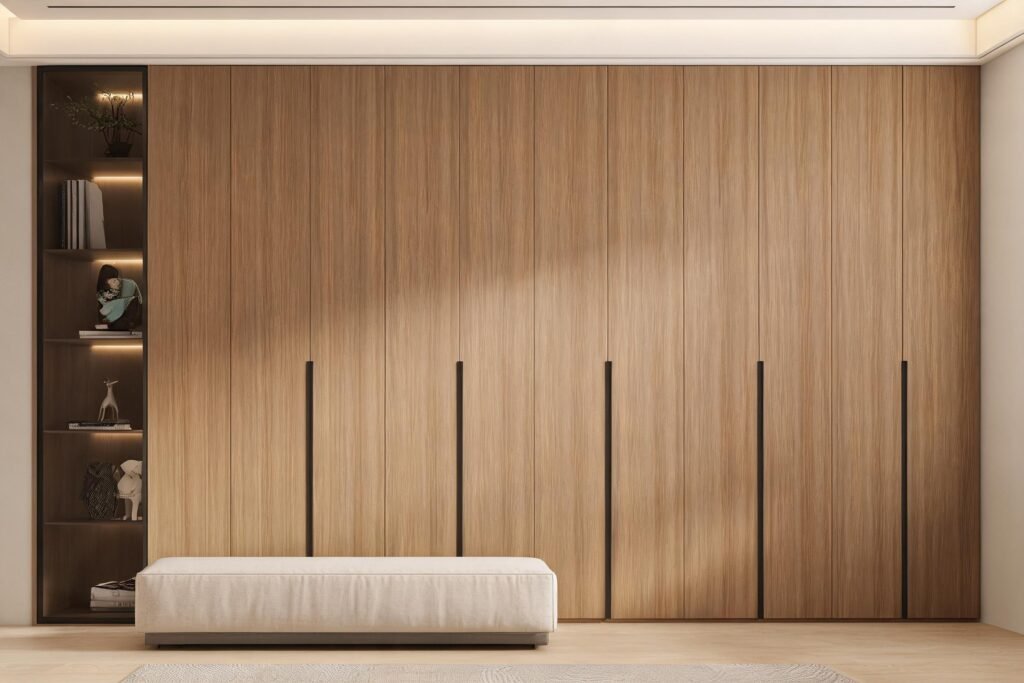
How to Organize a Wardrobe: 6 Proven Zones
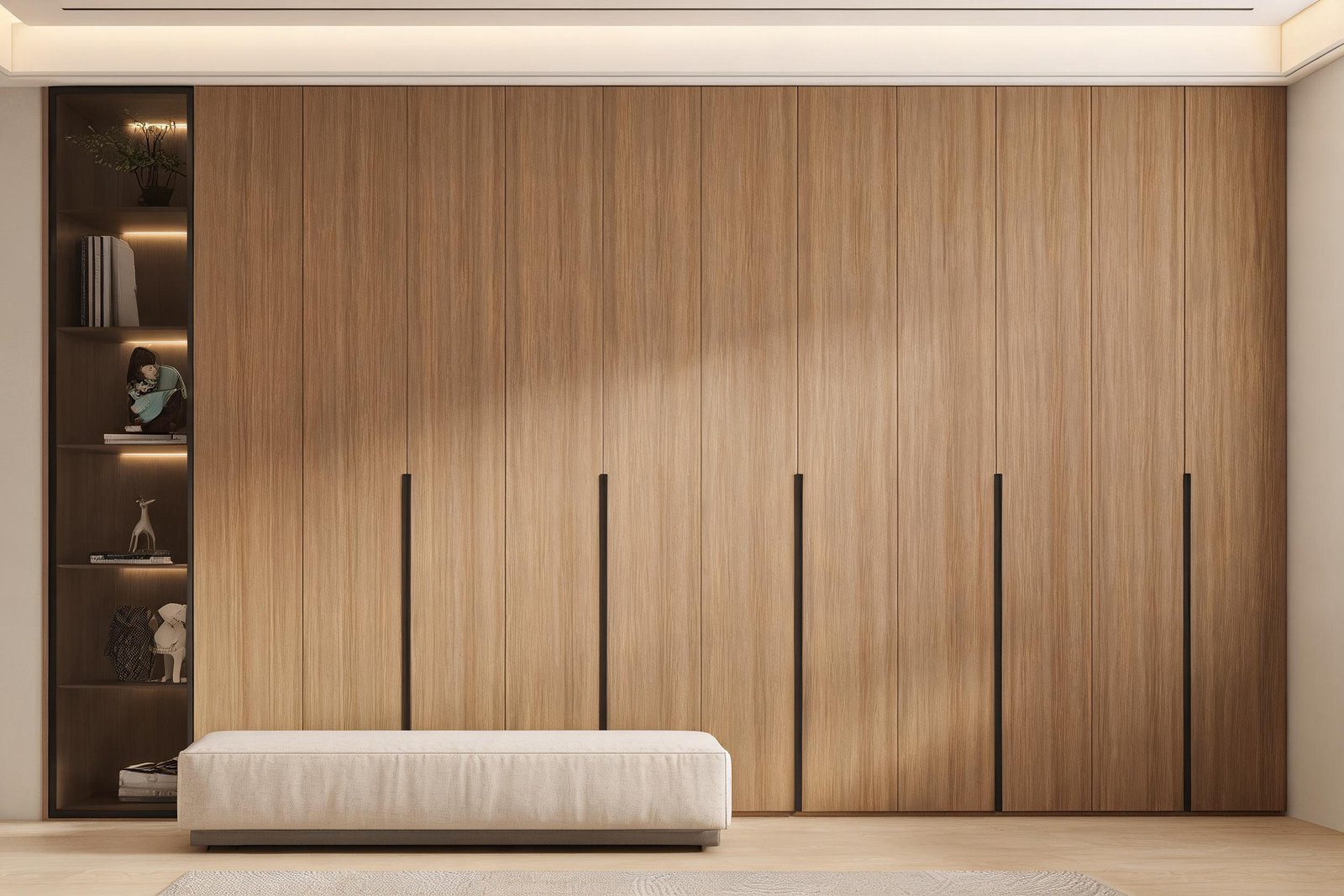
I have rebuilt my wardrobe interior three times, and the version that finally held up had nothing to do with folding technique. It was the layout. How to organize a wardrobe stops being a monthly chore the moment every category of clothing has a fixed home at a height that matches how often you use it. I have rebuilt my own wardrobe three times and helped two friends do the same, and the layout did far more than any folding method I tried.
How to Organize a Wardrobe: The 6-Zone System
Divide the interior into six horizontal zones by height: off-season storage above, long hanging at the top, short hanging at eye level, folded stacks and drawers in the middle, low drawers below, and shoes and baskets at floor level. Every item then has one home, and nothing drifts.
That is the system in one paragraph. It works because it follows use, not taste. The clothes you wear four times a week live at arm height. The coat you wear twice a year lives where you must reach for it. Most advice puts folding first, which is backwards: how to organize a wardrobe is a layout problem long before it is a folding problem.
| Zone | Height from floor | What belongs there | Why it works |
|---|---|---|---|
| 1 Top storage | 200 to 240 cm | Suitcases, off-season knits, spare bedding | Rarely touched, so hard to reach is fine |
| 2 Long hanging | 150 to 200 cm | Dresses, long coats, jumpsuits | Needs an uninterrupted drop of 135 cm or more |
| 3 Short hanging | 100 to 150 cm | Shirts, blazers, skirts | Two rows fit where one long drop would sit |
| 4 Folded stacks and internal drawers | 70 to 130 cm | Knitwear, jeans, t-shirts | Eye level, so folded edges stay tidy |
| 5 Low drawers | 30 to 70 cm | Underwear, socks, gym kit | Reached by bending, used daily, fine low |
| 6 Floor level | 0 to 30 cm | Shoes, baskets, laundry | Heavy and dirty things stay at the bottom |
Two notes from experience. They also happen to be the two places where how to organize a wardrobe goes wrong most often, and both of them are cheap to fix before you build anything. Zone 3 is where most wardrobes waste the most air: a single long drop holding shirts leaves a metre of empty space under the hems. Zone 4 is where I put internal drawers instead of stacking folded clothes on an open shelf, and that one change stopped my knitwear from developing a permanent lean.
How to organize a wardrobe with shelves
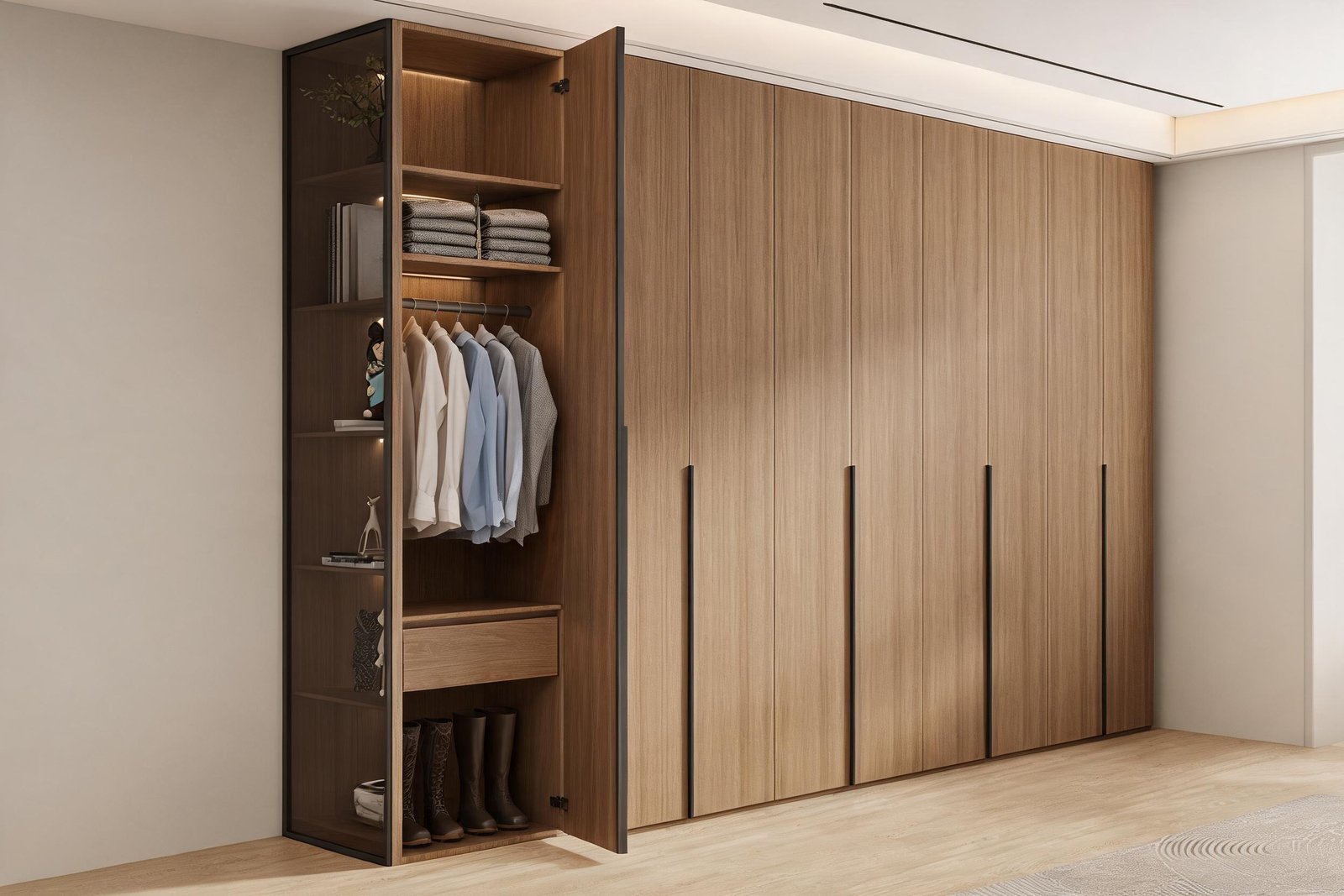
Most of what passes for wardrobe advice is really shelf design, and how to organize a wardrobe with shelves is the search that brings most people to this subject in the first place. Shelves work when they hold one layer of folded clothing and nothing more. If a stack is taller than about 30 cm, you will pull from the bottom and rebuild it weekly. Space shelves 30 to 35 cm apart for folded tops, 25 to 30 cm for jeans and trousers, and keep the top shelf higher for boxes and bedding.
The mistake I made for years was treating shelves as storage capacity. They are not. Anyone searching how to organize a wardrobe with shelves is really looking for shelf spacing, and spacing is what decides whether a stack survives the week. A 60 cm wide, 35 cm deep shelf holds roughly eight folded sweaters laid flat in one column, and roughly sixteen if I fold and stand them upright in a row instead. Standing folds, sometimes called file folding, let me read every item at a glance without lifting the stack, and they stay put when I pull one out.
Two more shelf rules that survived real life:
- Keep one shelf completely empty on purpose. It is the buffer that absorbs a shopping trip or a change of season without reorganising the whole box.
- Never store shoes on a white or light shelf above folded knitwear. Dust falls, and you will notice it on the pale grey sweaters before anything else.
- Match the rail to the hanger. A hanger is about 45 cm wide, so a 55 cm carcass closes on it cleanly, while a 40 cm interior forces shirts sideways. The Wikipedia entry on clothes hangers is a short and genuinely useful read on hanger geometry.
If your wardrobe has a single hanging rail and one shelf, adding a mid-height shelf with a cheap rail under it usually doubles usable short hanging. That is the cheapest upgrade in this entire article.
How to plan a wardrobe layout: four numbers to measure first
Before you move a single shirt, measure four numbers: the longest garment you hang, your own shoulder width, the tallest pair of boots or shoes you own, and the available wall width in centimetres. Those four numbers decide every internal height, and skipping them is why ready-made interiors end up half empty. How to plan a wardrobe layout really is this simple, and no app beats a tape measure and a pencil sketch. The Wikipedia entry on closets shows how long fitted storage has been built around these same dimensions.
Here is how the numbers translate. My longest dress needed a 140 cm drop, so the long-hanging zone got 145 cm and no more. My shoulder width plus a hand, about 55 cm, set the cabinet depth, which is why a 55 cm deep carcass feels comfortable and a 40 cm one does not. Boots at 32 cm meant the shoe zone could not be a 25 cm drawer. And the wall width told me how many modules I could line up before a door would hit the bed.
Depth is the number people get wrong. Standard inner depth is around 55 cm, and a coat hanger is about 45 cm wide, so a 55 cm carcass leaves the door room to close without pressing fabric. A 40 cm deep interior is only comfortable for folded clothes and shirts hung at an angle.
The best way to organize a wardrobe, in my experience, is to build it from modules you can extend rather than one fixed box. Get these four numbers right and how to organize a wardrobe becomes a marking-out job rather than a series of decisions. Then decide how the layout should scale. This is where modular units earn their price: you are not buying one box, you are deciding how many times you may want to extend the run along the wall later. Our Exquisite Wood Grain Modular Closet (see price and details here) is built around that idea. It stands 240 cm tall, which fills a high-ceiling wall properly, and it is offered in 28 widths from 60 cm single units up to 320 cm runs, so the wardrobe grows with the room rather than with the shopping trip. The carcass depth is 55 cm and the panels are ENF grade, which is the strictest formaldehyde class used in furniture board.
The mixed-door option matters more than it sounds. Being able to combine a solid wood grain door with a glass door on the same unit means the section you want to display gets glass, and the section holding cleaning supplies and storage boxes keeps a solid front. That mix is not a design flourish, it is a way to avoid a wardrobe full of glass doors that show every untidy corner.
Wardrobe organization ideas that survive a full season
Wardrobe organization ideas only survive if they do not require discipline, and a wardrobe organization system is only as good as your laziest morning. These seven have lasted me through two winters.
- Hang by length, not by colour. Left to right, shortest to longest. Colour grouping looks good on the day and falls apart after two washes.
- One hanger, one garment. Layered hangers feel clever until you need the shirt underneath.
- Slim velvet hangers, but only for shirts. They save about a third of the rail width, and they are not strong enough for heavy coats.
- Roll knitwear, fold everything else. Rolling stops the shoulder bumps that folding creates on fine wool.
- Baskets for the untidies. One basket for laundry, one for repair, one for charity. All three live at floor level.
- Swap one rail seasonally. When winter coats move up, summer dresses move to the top storage zone, and the everyday rail stays readable.
- Label the top boxes on the short side you can see. Facing the label toward the door saves pulling down four boxes to find one.
None of these take more than an afternoon, and each one removes a small recurring decision. That is the whole point of organising: fewer choices on a Tuesday morning.
Where does the LED display section belong?
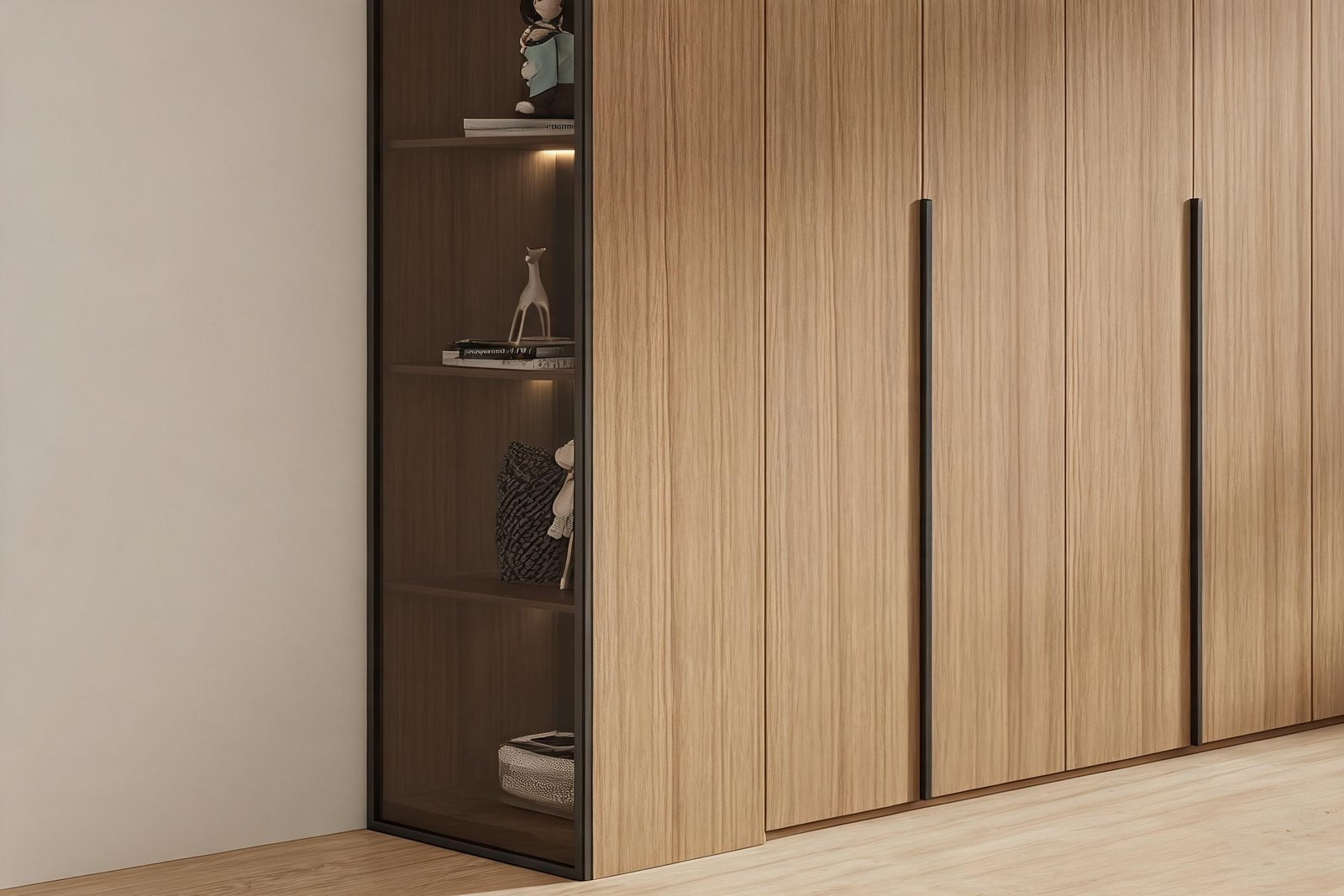
At eye level, and it should be the only part of the wardrobe that behaves like display furniture rather than storage. Nothing about how to organize a wardrobe changes because of lighting; a lit section simply adds a home for the fifteen items you want to see. Warm LED lighting behind glass turns ten to fifteen items into a gallery, and it is also genuinely useful at 7 am when you are looking for a pair of earrings on a winter morning.
The LED lit open side section on our wood grain modular closet sits beside the closed modules rather than inside them, so the clothes section keeps its solid doors and the display section stays lit and dust-free. Behind the solid doors, hidden internal drawers on soft-close glides take the items you do not want visible, and buffered hinges keep every door from slamming. The brushed vertical handles are long enough to use with a full hand, which sounds trivial until you have lived with a 10 cm stub handle.
One honest limitation: LED display space is a luxury, not a storage gain. Fifteen items displayed beautifully still leaves the rest of your wardrobe doing the real work. If your only goal is maximum capacity, skip the glass and put the money into an extra module.
What wastes the most wardrobe space?
The single biggest waste is a long drop holding short garments. A shirt needs about 100 cm of hanging depth; if the rail above it runs the full height, a third of the wardrobe is decorative. Splitting that column into two short rails recovers space without buying anything.
The second biggest waste is a shelf holding one tall stack instead of two shallow ones. Third is a rail with empty air above the folded section. And fourth, the one that surprises people, is a wardrobe that is deep enough for 55 cm but only 40 cm of it is usable because a solid door panel eats the front plane. None of these are decor problems. They are layout problems, which is why how to organize a wardrobe deserves an hour of measuring before an afternoon of folding. Fix those four things and you have solved nine tenths of how to organize a wardrobe without buying a single storage product. Measure the interior, not the exterior.
Frequently asked questions
How often should you reorganise a wardrobe?
Twice a year is enough for most people, once at the start of each season. A full reset takes an afternoon in a 180 cm wide wardrobe. Anything more frequent usually means the layout, not the discipline, is wrong. A wardrobe organization system should hold for months without maintenance.
Should you fold or hang knitwear?
Fold it. Hanging knitwear stretches the shoulders and the garment loses shape within a season. Roll fine wool rather than folding it flat, and keep the stack under 30 cm so nothing presses the bottom layers.
How to organize a wardrobe for two people?
Split by person rather than by garment type. Each person needs their own short hanging run, and shared items move to the middle module. Personal rails beat a perfect-looking shared system every time, because nobody wants to cross the room for a jacket.
How much hanging space does one person need?
Around 60 to 90 cm of short hanging rail for everyday clothes, plus about 50 cm of long hanging for coats and dresses. Add another 40 cm if you dress formally for work four days a week. Measuring this before you shop is the part of how to organize a wardrobe that people skip.
Do you need a full-height wardrobe if the room has low ceilings?
No. A 200 cm unit fits under most standard ceilings with clearance, and the 240 cm version is meant for high-ceiling rooms where the extra 40 cm becomes the off-season zone. Choose by ceiling height first, then by width.
Does a display section change how to organize a wardrobe?
Only at eye level. The lit section takes the fifteen items you would rather see and leaves the closed modules for everything else, so the working side stays practical and the visible side does the decorating.
Is an LED wardrobe worth the extra cost?
It depends on what you are lighting. For a display section holding watches, bags or jewellery, yes, it earns its place. For six metres of solid door front, you will look at the light twice and then only open the doors.
Layout first, folding second, shopping third, and the best way to organize a wardrobe is to get that order right before spending anything. Once the six zones are marked out and the four numbers are measured, how to organize a wardrobe is a one-afternoon job you will not repeat in a hurry. If you are planning a fresh run on a high-ceiling wall, check the Exquisite Wood Grain Modular Closet price and details here, or browse the full wardrobe collection and compare hinge door and assembled options side by side.
