

Chic Minimalist Glass Display Cabinet: The JX-WC-036 Buyer’s Guide
The problem with most display cabinets is that they hide what they are supposed to show. Glass that catches glare, shelves you can barely see into, and no light — so the things you collected and cared about sit in a dark box, gathering dust instead of attention.
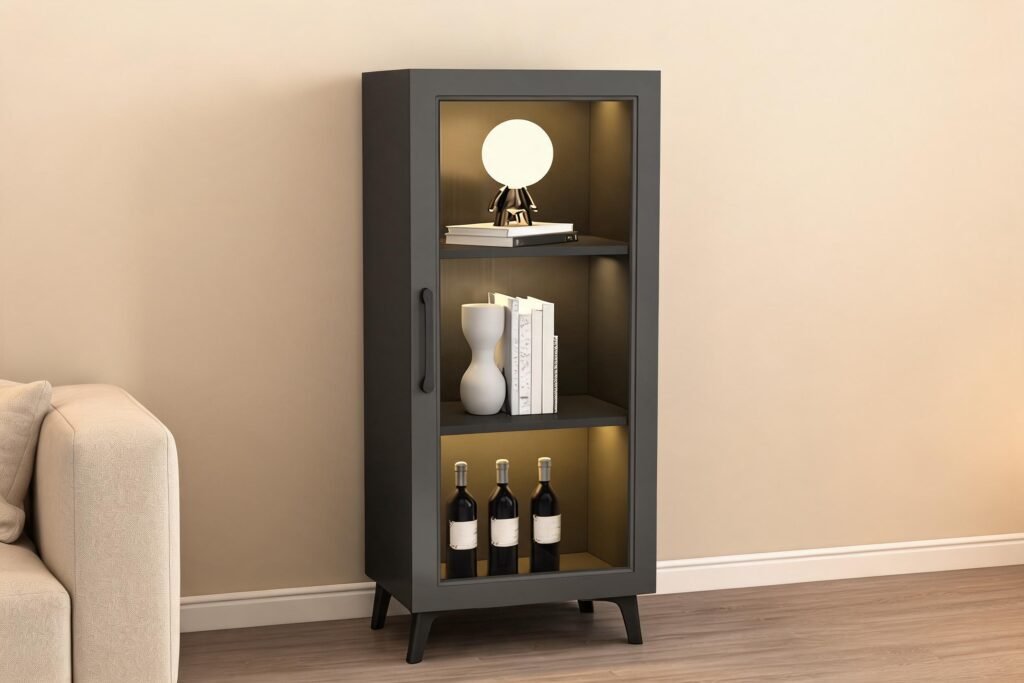
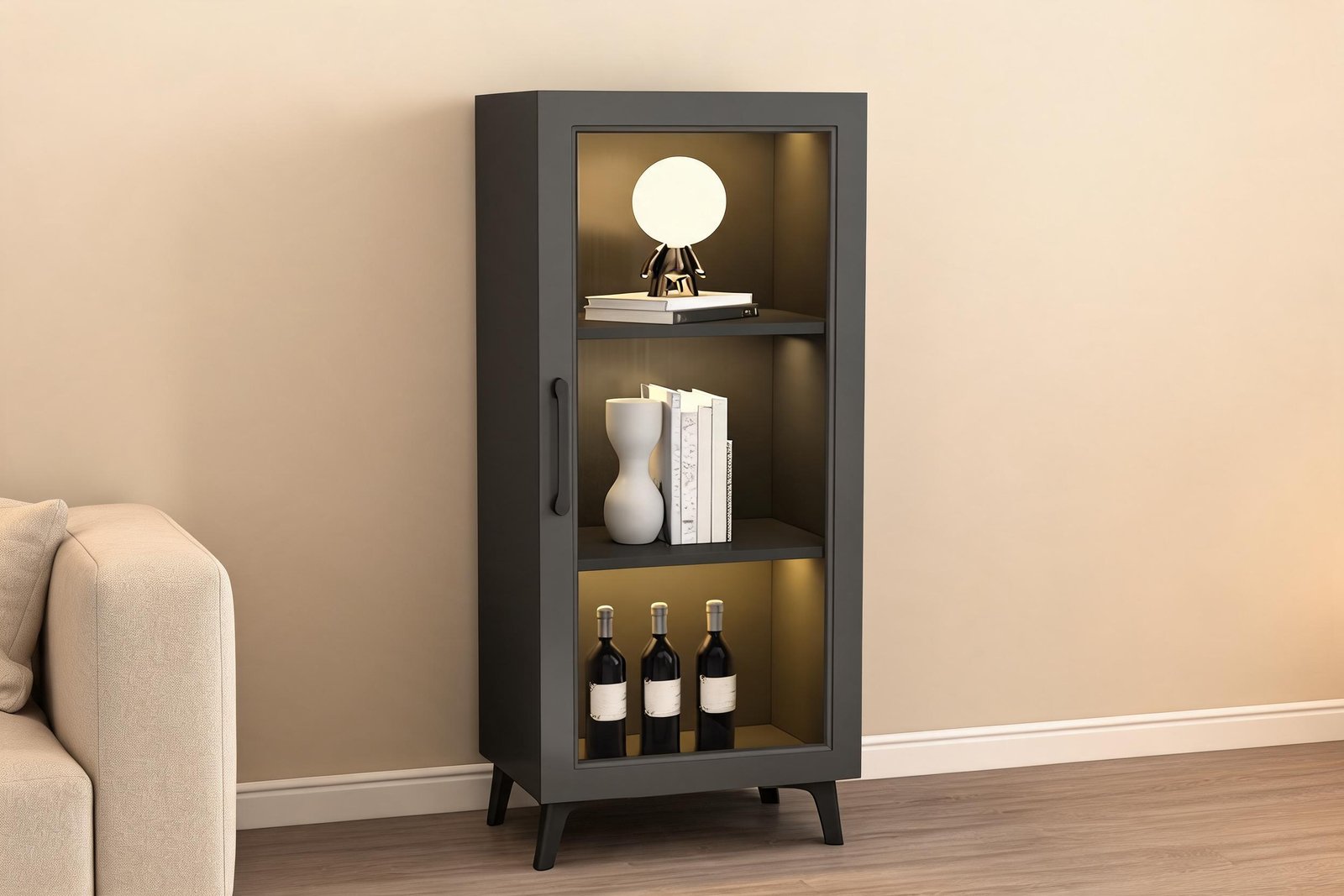
The Chic Minimalist Glass Display Cabinet (JX-WC-036) from Apexerahomelife solves exactly that: a single full-height glass door, three open display levels, and — the detail that changes everything — hidden 3000K LED strip lighting built into the top edge of each shelf. This guide covers why the lighting matters, what the glass and finish actually do, how to pick the right height, and where it belongs in your home.
👉 See the Minimalist Glass Display Cabinet (JX-WC-036) — $132
Glass Display Cabinet: Why built-in LED lighting matters more than you think
More background: Wikipedia — Float glass. More background: Wikipedia — Cabinetry.
A display cabinet is only as good as its light. Overhead room light rarely reaches the back of a shelf, which is why most cabinets look dark and flat from across the room. The JX-WC-036 builds 3000K warm-white LED strips into the top edge of every shelf — hidden in the board, so you never see a bulb or a wire.
| Lighting | Effect on display | Ambience |
|---|---|---|
| Hidden 3000K LED strips | Even, warm, downward light on every item | Warm, gallery-like glow |
| No lighting | Items sit in shadow, colours go flat | Dark, flat, uninviting |
| Harsh white LED | Washes out warm tones, feels clinical | Cold, sterile |
3000K is the same warm temperature as an incandescent bulb, so it flatters wood, glass, and ceramics without looking yellow. The strips sit along the top edge of each shelf, so light falls downward across the items — the way a gallery lights a piece, not the way a fridge lights a shelf.
Glass, finish, and the details that hold up
- 3C tempered glass door — a single full-height pane with a slim matching frame, so you see everything inside with no distortion and no glare. Tempered means it is far stronger than ordinary glass and shatters safely if it ever breaks.
- Matte charcoal-grey finish — a low-saturation, fingerprint-resistant surface that reads as quiet and architectural, and makes the lit interior stand out even more.
- Three display levels — two full shelves divide the interior into three zones, sized for vases, books, bottles, and collectibles.
- Slim vertical bar handle — a matching charcoal handle runs along the door edge, keeping the front clean and handle-less-looking.
- Four tapered slanted legs — the cabinet sits on angled legs that lift it off the floor, so a robot vacuum passes underneath and the whole piece looks lighter than a box on the ground.
If this is part of a larger display project, the JX-WC-036 belongs to the full display cabinet & wine cabinet collection.
Size guide: nine heights, one footprint
Our own rule for glass display cabinet comes down to three checks.
The JX-WC-036 keeps a slim footprint — roughly 30–40 cm wide and 40 cm deep — and comes in nine height and width combinations, from a compact 90 cm to a commanding 160 cm:
- 90 cm (about 35 in) — a low accent piece for an entryway or beside a sofa.
- 125 cm (about 49 in) — the mid-height sweet spot for a living room or dining room.
- 160 cm (about 63 in) — a full-height statement cabinet for a home bar or gallery wall.
Measure the wall first: leave clearance for the door to swing open, and check the ceiling height if you are choosing the 160 cm option.
Where it works best
What most glass display cabinet guides skip is the measurement step.
The JX-WC-036 is the rare piece that works in almost any room, because it is essentially a lit stage for whatever you put inside:
- Living room — display a curated set of vases, art books, and glassware on the lit shelves; the warm glow becomes part of the evening ambience.
- Home bar / dining — line up bottles and glasses on the lower two shelves and use the top for decanters.
- Entryway — a compact 90 cm version with a single sculptural object and a book reads as intentional, not cluttered.
Keep each shelf to three or fewer objects for the cleanest look. The light does the work; too much on a shelf and it reads as storage, not display.
FAQ
The short answer on glass display cabinet: match the piece to the space first, then to the look.
Is the LED lighting wired in, or battery? The lighting is integrated into the cabinet and powered through a standard connection, so there are no batteries to replace. It runs as a soft, always-ready display light.
Does the glass door keep dust out? Yes — the door closes with even, sealed gaps that keep most dust off your items, which is the whole point of a display cabinet over an open shelf.
Can I put wine bottles on the shelves? Yes. The lower two levels are tall enough for standard bottles, and the lit shelves make a bottle wall look curated rather than stored.
Is tempered glass safe? Yes. 3C tempered glass is heat-treated for strength, and if it ever does break, it crumbles into small dull pieces instead of sharp shards.
What colour options are there? Grey and white — both matte, low-saturation finishes that sit quietly in the background and let the lit interior carry the room.
Where to get it
If you are researching glass display cabinet, start with the points below.
The Chic Minimalist Glass Display Cabinet (JX-WC-036) is available in grey and white, in nine heights from 90 cm to 160 cm, at $132.
👉 Get the Minimalist Glass Display Cabinet here
For more pieces with the same lit, minimalist look, browse the display cabinet collection.
Glass Display Cabinet: Sizing, Lighting and Placement
Depth is what separates a display cabinet that works from one that crowds a room. A 14 to 16 inch deep unit takes a dinner plate and a tall vase; 18 inches and up is for large collectibles. Leave at least 30 inches of clear floor in front so the doors can open fully and you can stand back to look at the contents.
Lighting changes how a glass display cabinet reads more than any other detail. A warm 3000K LED strip under the top shelf makes objects legible without glare, while cool 5000K light reads clinical. A cabinet without built-in lighting will need a small puck light or a nearby lamp, because glass reflects a ceiling fixture straight back at the viewer.
Placement matters as much as the cabinet itself. Putting it where direct sun hits the glass causes both glare and fading, so a wall that takes morning light is a poor home for anything with artwork or textiles inside. A position 60 to 90 cm from a lamp gives you soft reflections instead of a single hot spot.
