

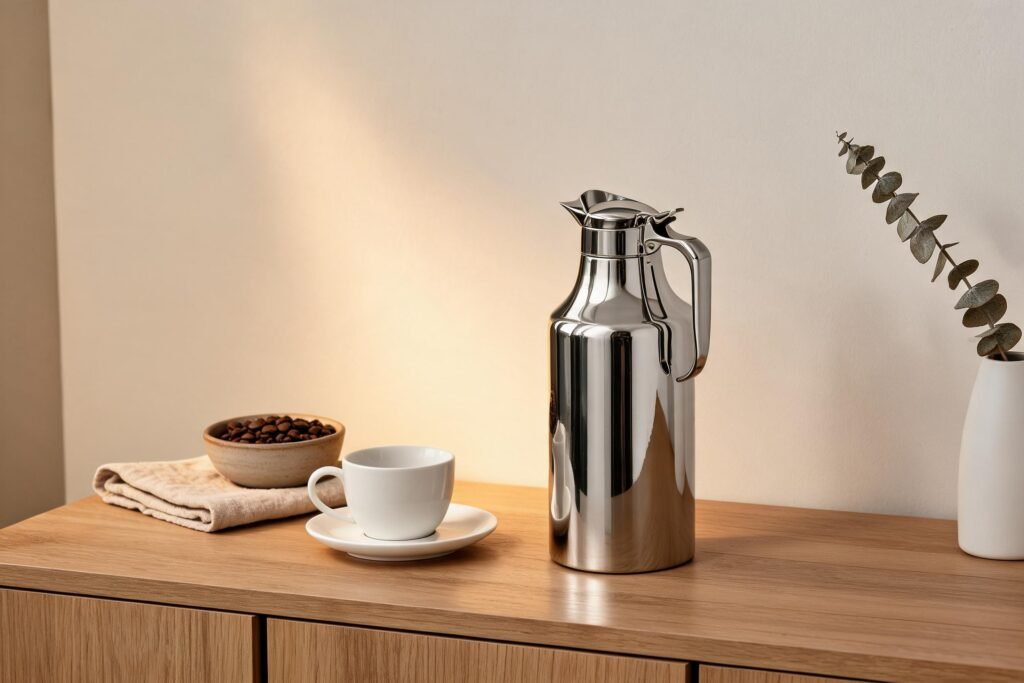
Most coffee pots are designed to sit on heat. A thermal carafe is designed to keep it. That single difference decides how a cup tastes two hours after you brew it, and it is why I stopped leaving a glass pot on a hot plate all morning. I have used both, badly at first, and this comparison is what I would tell a friend who is choosing between them. A thermal carafe is not automatically better. It is better for a specific kind of morning.
What a Thermal Carafe Actually Does
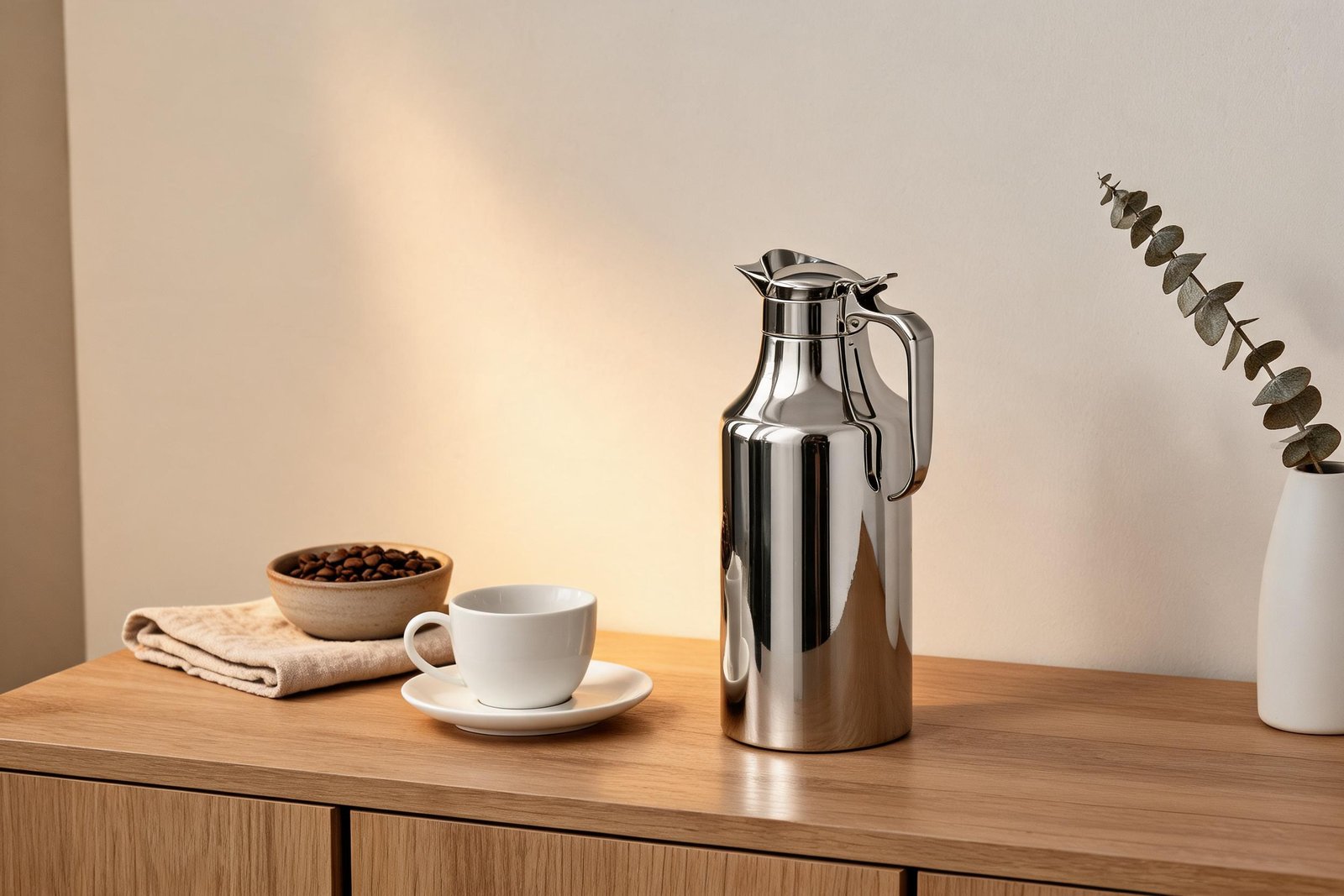
A thermal carafe is a double-walled jug with a vacuum between the two steel walls, filled through a sealed lid rather than poured from an open pot. The vacuum layer slows heat loss to a few degrees per hour, so the drink stays hot with no cord, no plate and no power.
Steel conducts heat like any metal, so the trick is the gap. Air is pulled out of the space between the inner and outer wall, and with almost nothing left to carry heat across, the coffee inside has nowhere to lose it quickly. The same wall that keeps heat in also keeps heat out, which is why the same jug holds iced water at a picnic without sweating all over the table.
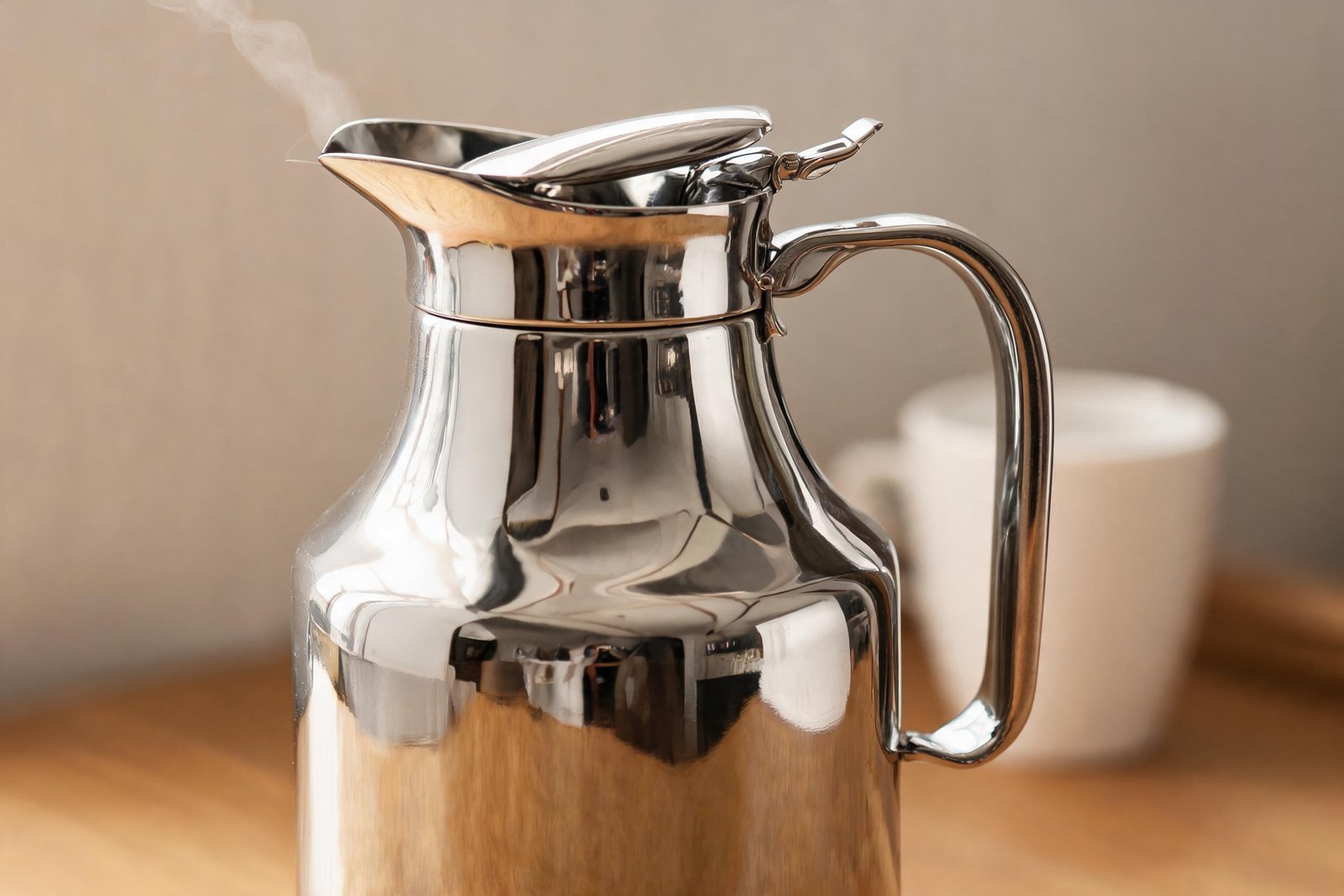
The lid matters as much as the wall. A pour-through lever lid closes the jug between servings, and steam is where most of the heat goes. A stainless steel thermal carafe with a tight gasket and a properly seated lid holds drinkable coffee for an entire morning, while an open pot at room temperature is lukewarm in forty minutes.
Two things the vacuum does not do. It cannot reheat anything, and it cannot make coffee better than the brew you poured in. If the coffee was bitter at 8am, it is still bitter at 10am, just warmer.
Thermal Carafe vs Coffee Pot: The Differences That Matter
Here is the honest head-to-head. I am comparing a vacuum thermal carafe with the two things people usually mean by coffee pot: a glass carafe on a warming plate, and a plain steel serving pot with no insulation.
| Thermal carafe (vacuum) | Glass pot on a hot plate | Uninsulated steel pot | |
|---|---|---|---|
| Heat source | None | Electricity, all morning | None |
| Still hot after 2 hours | Yes, typically 4 to 6 hours | Yes, but the plate keeps cooking it | No, roughly 30 to 45 minutes |
| Taste after 2 hours | Close to fresh | Flatter, slightly stewed | Cold and flat |
| Breakage risk | Low, steel body | High, thin glass | Low |
| Safe to leave on a sideboard | Yes | No, the plate stays hot | Yes, but pointless |
| Works for iced drinks | Yes | No | Yes, badly |
| Cleaning | Hand wash, lid comes apart | Easy, wide mouth | Easy |
| Best for | Serving a table over hours | Drinking it within the hour | Short pours, single cups |
The glass pot with a hot plate is not a bad product. It keeps coffee hot by adding energy, and if you drink four cups in an hour it does the job. The problem shows up when the pot sits there for two hours: heat that comes from below keeps working on the coffee, and the brew slowly moves toward a flatter, cooked flavour. That is the difference you taste, not the temperature.
A thermal carafe works the other way round. You pour once, close the lid, and stop touching it. Every time you open the lid you trade heat for convenience, so the discipline is simply to decant what you need and seal it again.
If you want the version of this that holds a full table’s worth, our 1.5 L mirror polished steel thermal carafe is the one I would point you to first: see the Steel Thermal Carafe and its sizes here. For a smaller household, the slim cylindrical design holds 1 L: check the Steel Cylindrical Carafe price and details.
How Long Does a Thermal Carafe Keep Coffee Hot?
A good vacuum carafe holds coffee above 135°F (57°C) for roughly 4 to 6 hours, and it stays pleasantly drinkable for the first 2 to 3. Preheating the jug with hot water before you fill it adds about an hour, and keeping the lid closed between pours adds more.
Temperature matters for more than comfort. The US food safety guidance treats the range between 40°F and 140°F as the zone where bacteria grow, which is the reason commercial kitchens keep hot drinks above 135°F: the USDA Food Safety and Inspection Service explains the range here. Coffee itself is not a high-risk food, but a carafe that is still above that line after a morning of meetings is doing its job properly.
Does Preheating a Thermal Carafe Really Help?
Yes, and it is the cheapest upgrade you can make. A cold steel inner wall pulls heat out of the first cup immediately. Fill the jug with hot tap water for two minutes, empty it, then pour the coffee in. You gain somewhere between 30 minutes and an hour of hold time for free.
Why Does the Coffee Taste Different After Four Hours?
Because time, not temperature, is the variable. Coffee keeps oxidising inside the jug, so a four-hour-old cup tastes softer and less bright than a fresh one even when it is still hot. A vacuum carafe keeps it closer to fresh than a hot plate does, because it is not being continuously warmed.
How to Keep Coffee Hot for Hours Without a Hot Plate
- Preheat the jug. Two minutes of hot water, then empty it. This is the step most people skip.
- Brew strong. Slightly stronger coffee tastes better as it cools, and a little hot milk or water can lighten it in the cup.
- Fill to the shoulder, not the brim. Leaving an inch of air is fine; leaving the jug half empty wastes the vacuum’s work because there is no liquid mass to hold heat.
- Close the lid immediately. The lever lid should click shut on a clean gasket. Steam is your biggest loss.
- Pour into warm cups. A cold ceramic cup steals more heat in ten seconds than the carafe loses in twenty minutes.
- Set it on a trivet, not near a cold window. Drafts matter more than people expect in a kitchen.
How to Keep Coffee Hot at a Dinner Party
Warm the cups, then pour the first round and leave the carafe closed on the table. If you are serving after dessert, keep the jug in the room rather than the kitchen so it is not carried through a cold doorway. One 1.5 L jug covers about ten small cups; a set of two covers a longer table without a second trip. Guests who want decaf, tea or just hot water can be served from the same jug, which is the quiet advantage of a carafe with no plate attached.
What to Look For in a Vacuum Carafe
There is no single best thermal carafe for every kitchen, because capacity and finish decide more than brand. Not every steel jug is a vacuum jug. Some are single-wall serving pots with a nice polished body and almost no hold time, so check for the words double-walled or vacuum insulated before you buy.
- Two walls, not one. A vacuum carafe is noticeably lighter than a solid steel pot of the same size, and it stays cool on the outside when it is full of coffee.
- A lever lid with a real gasket. The lid should seat with a soft click and pour cleanly without dripping down the body.
- A handle that balances full. Fill the jug at the sink in a shop if you can. A one-litre carafe is easy to pour one-handed; a 1.5 L jug with a small handle is not.
- Capacity per guest. One litre is about six or seven cups. A litre and a half is closer to ten.
- An opening you can actually clean. Lids that come apart in two pieces and a mouth wide enough for a bottle brush will save you from sour-smelling coffee in month three.
- The finish you are willing to wipe. Mirror polished steel looks superb and shows every fingerprint. Matte or brushed finishes hide marks and suit a busy kitchen.
If you also want a plain steel pot for brewing and short pours, we keep a mirror polished steel coffee pot in the same family: see the Steel Coffee Pot here. It is a serving pot rather than a vacuum jug, so treat it as the one-hour option. The rest of the range, from trays to tumblers, sits in our stainless steel collection.
One Carafe, Two Jobs: Morning Coffee, Evening Iced Water
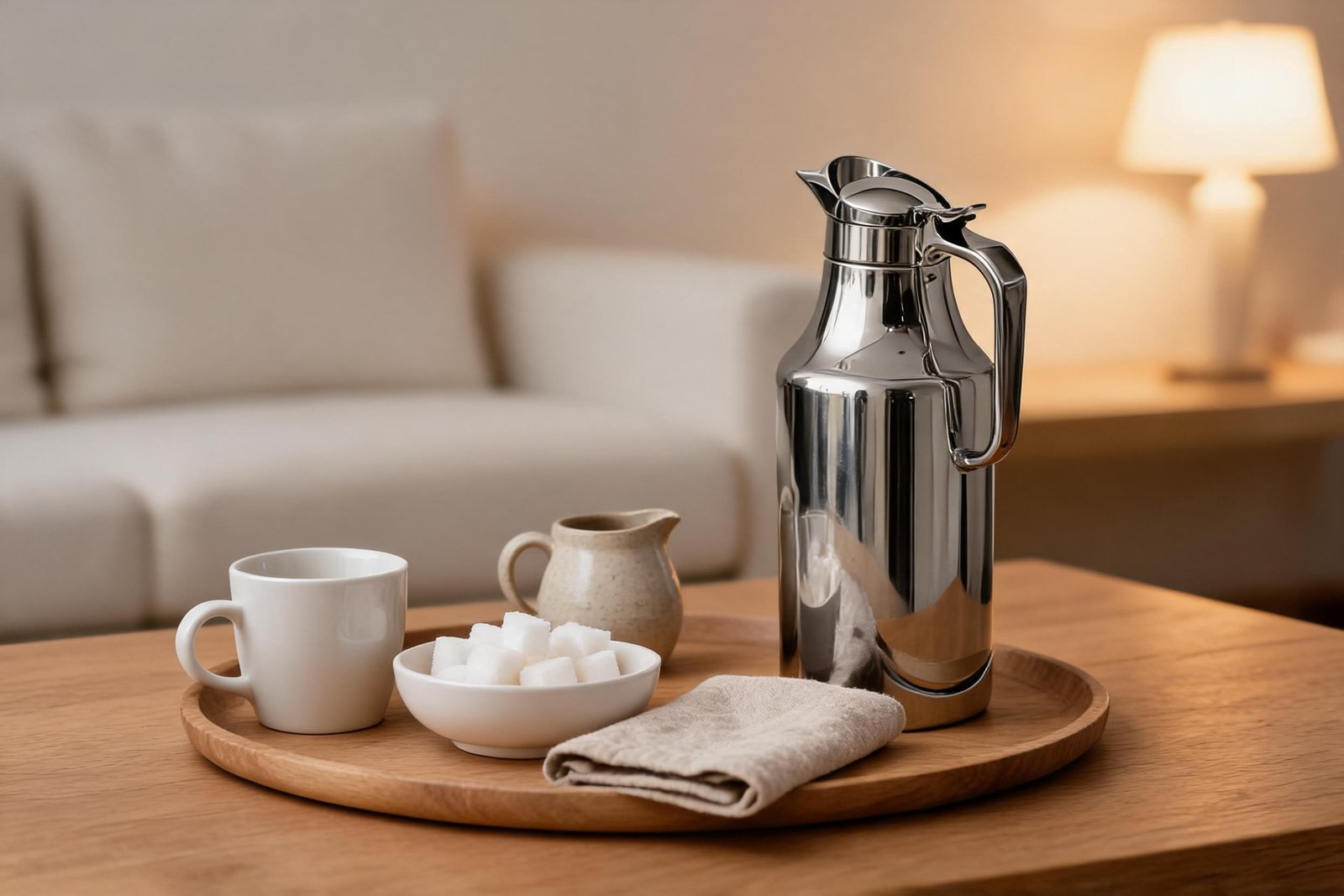
A vacuum jug does not care which direction the heat is going. Filled with coffee at breakfast it holds heat; filled with iced water and ice cubes at six in the evening it holds cold, and the outside of the steel stays dry instead of dripping onto a wooden table.
The one caveat is flavour transfer. Stainless steel does not hold odours the way plastic does, but coffee oils are stubborn on a gasket and around the lid. Rinse the empty jug with hot water and a drop of dish soap as soon as it is empty, leave the lid open to dry, and once a week fill it with hot water and a spoon of baking soda for ten minutes. Do that and the water tastes like water.
This is the reason I would choose a steel thermal carafe over a glass-lined one for a home bar or a guest table. It takes hot coffee in the morning and cold water in the afternoon, and it looks like a serving piece on a sideboard rather than an appliance. The vacuum flask principle itself is over a century old, and it has not really been improved on: the background on the vacuum flask is here.
Thermal Carafe Questions I Get Asked
How long does a thermal carafe keep coffee hot? Four to six hours above 135°F if you preheat it and keep the lid closed. Two to three of those hours taste genuinely fresh.
Is a thermal carafe better than a coffee pot? For serving over hours, yes. For drinking one cup at a time from a machine that brews into its own pot, the pot is simpler and cheaper.
Can I put a steel thermal carafe in the dishwasher? The body usually survives, the gasket and the polished finish usually suffer. Hand wash it and it will look new for years.
Can I use a vacuum carafe for tea and cold drinks? Yes. Rinse it well between drinks and the same jug handles coffee, tea, iced water and lemonade without carrying flavours across.
Does an expensive carafe hold heat better than a cheap one? Not automatically. What matters is a real vacuum layer, a gasket that seals and a lid you close. A well-made mid-priced carafe beats a badly sealed premium one.
The Honest Verdict
If your morning is a standing pot on a warming plate and one cup an hour, keep the pot. If you brew once, serve a table, or want hot coffee at ten without a cable, a thermal carafe is the better tool, and the 1.5 L version in our range covers a group without a refill: shop the mirror polished Steel Thermal Carafe here. Choose the size by how many cups you actually serve, preheat it every time, and it will hold the temperature for as long as you need.
