

Sliding vs Hinged Wardrobes: Which Is Right for You?
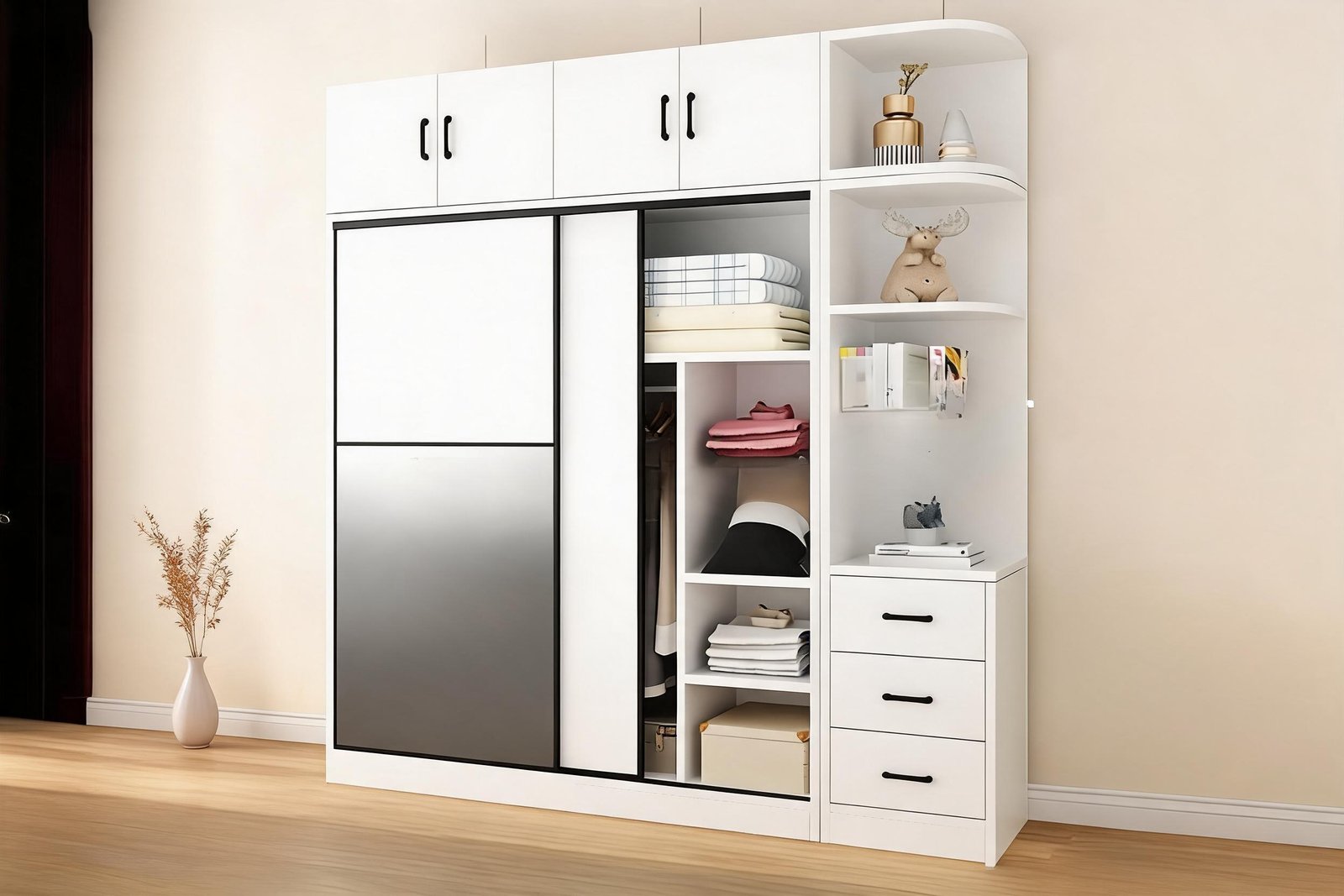
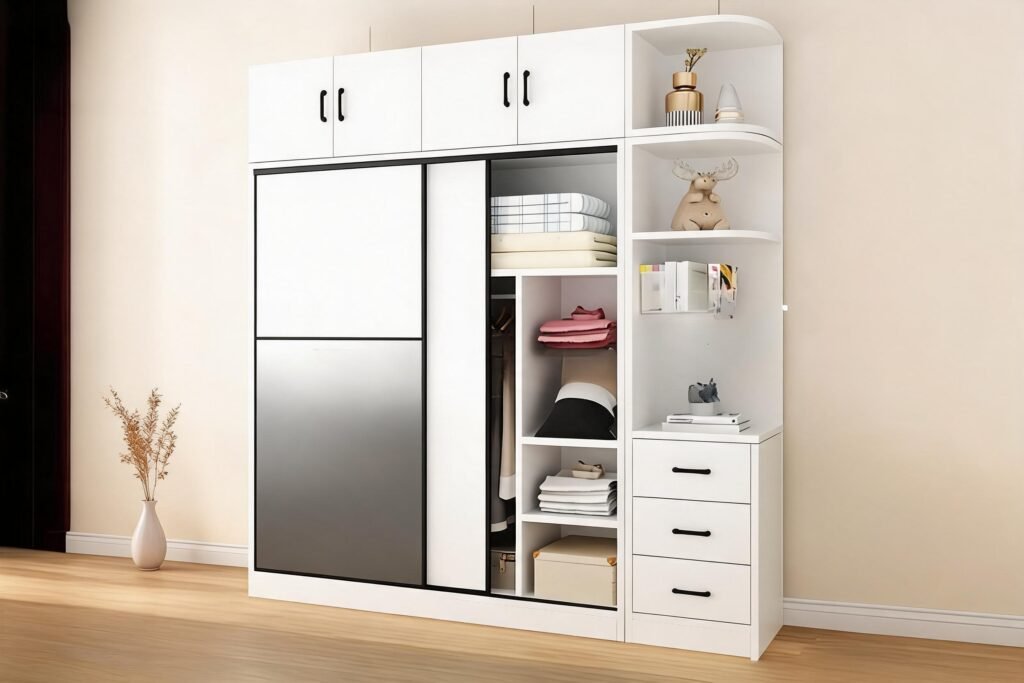
A wardrobe is a once-a-decade purchase, so the door style you choose matters more than it first appears. The single biggest decision — sliding doors or hinged doors — decides how much floor space you keep, how much of your clothes you can see at once, and how the piece looks in the room. This guide breaks the two down side by side, and points you to a sliding wardrobe that solves the space problem outright. 👉 See the 94.5-inch Eco-Glide sliding wardrobe price & details here — $448.
Sliding vs Hinged Wardrobes: The Quick Answer
Choose sliding doors if your bedroom is compact or your bed sits close to the wardrobe — they glide sideways and need zero swing clearance. Choose hinged doors if you have a larger room and want full access to the entire interior at once. Neither type is inherently better; the right answer is decided by your room’s dimensions and how you use your clothes.
How Much Space Does Each Door Type Need?
This is the test that decides most rooms. Hinged wardrobe doors swing outward, so they demand clear floor in front of the unit — usually 45–60 cm of swing projection, plus a comfortable walkway beyond that. Furniture industry guidance suggests a total clearance of roughly 105–120 cm in front of a hinged wardrobe for comfortable use.
Sliding doors glide along a track within the width of the unit, so they need no outward swing at all — only the standard 60–75 cm of walking space any wardrobe needs. In a bedroom under about 3 metres wide, or anywhere a bed sits close to the wardrobe wall, that difference is decisive. The Walkway Test is simple: measure the distance from your wardrobe wall to the nearest furniture. Under one metre, and hinged doors will feel restrictive every single morning.
Access, Cost and Durability Compared
Here is the honest head-to-head on the things that actually matter day to day:
| Feature | Sliding Wardrobe | Hinged Wardrobe |
|---|---|---|
| Floor space needed | ✅ None for door swing | ❌ 45–60 cm swing clearance |
| Full interior access | ⚠️ Partial (one panel blocks the other) | ✅ Full access when open |
| Upfront cost | ⚠️ Slightly higher (track hardware) | ✅ Lower |
| Tall / floor-to-ceiling | ✅ Tracks distribute weight well | ⚠️ Heavy doors strain hinges |
| Modern, seamless look | ✅ Clean full-height panels | ✅ Classic, flexible |
| Maintenance | ⚠️ Tracks need occasional cleaning | ✅ Simple hinges |
On durability, the real differentiator is not the door style — it is the hardware. A quality sliding system with good rollers runs smoothly for years, while cheap tracks jam within a couple of seasons. Either way, buy the best track or hinges your budget allows.
Why Eco-Certified Panels Matter (E0 vs E1)
Beyond doors, the panel inside the wardrobe affects the air you breathe while you sleep. Engineered wood is graded by its formaldehyde emission level:
- E0-grade — the strictest common standard, with emission levels low enough for nurseries and bedrooms.
- E1-grade — the widely accepted European minimum, higher emissions than E0.
- E2 and below — generally avoided in modern furniture for indoor use.
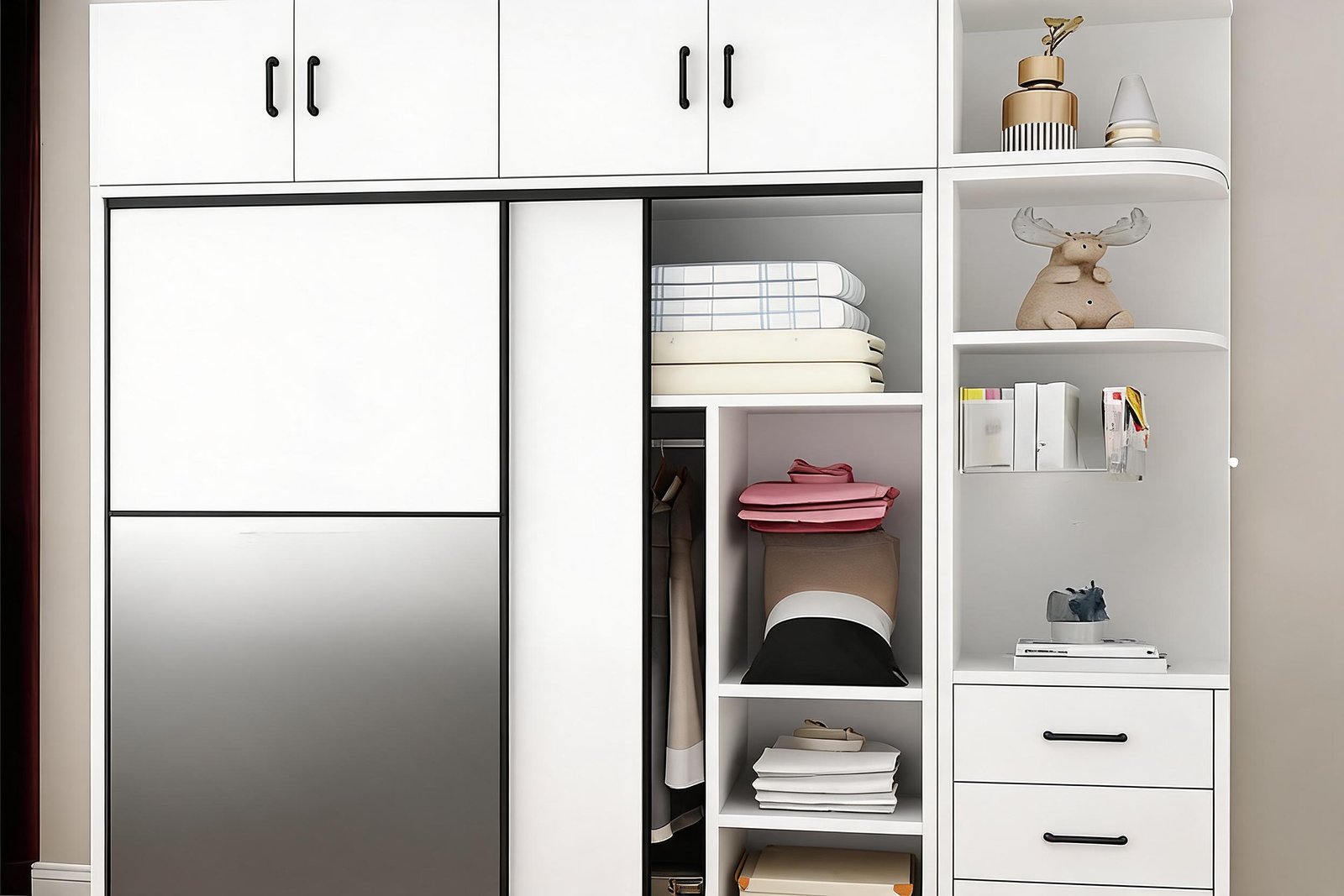
For a piece that sits in your bedroom for a decade, an E0-certified panel is the safer, healthier choice — it is the difference between “meets the minimum” and “built for the room where you sleep.” This is exactly why the Pristine Eco-Glide Sanctuary is built on an E0-grade sustainable panel rather than a cheaper board.
How to Choose the Right Wardrobe Size
Sizing is where most people undershoot or overshoot. Three numbers decide it:
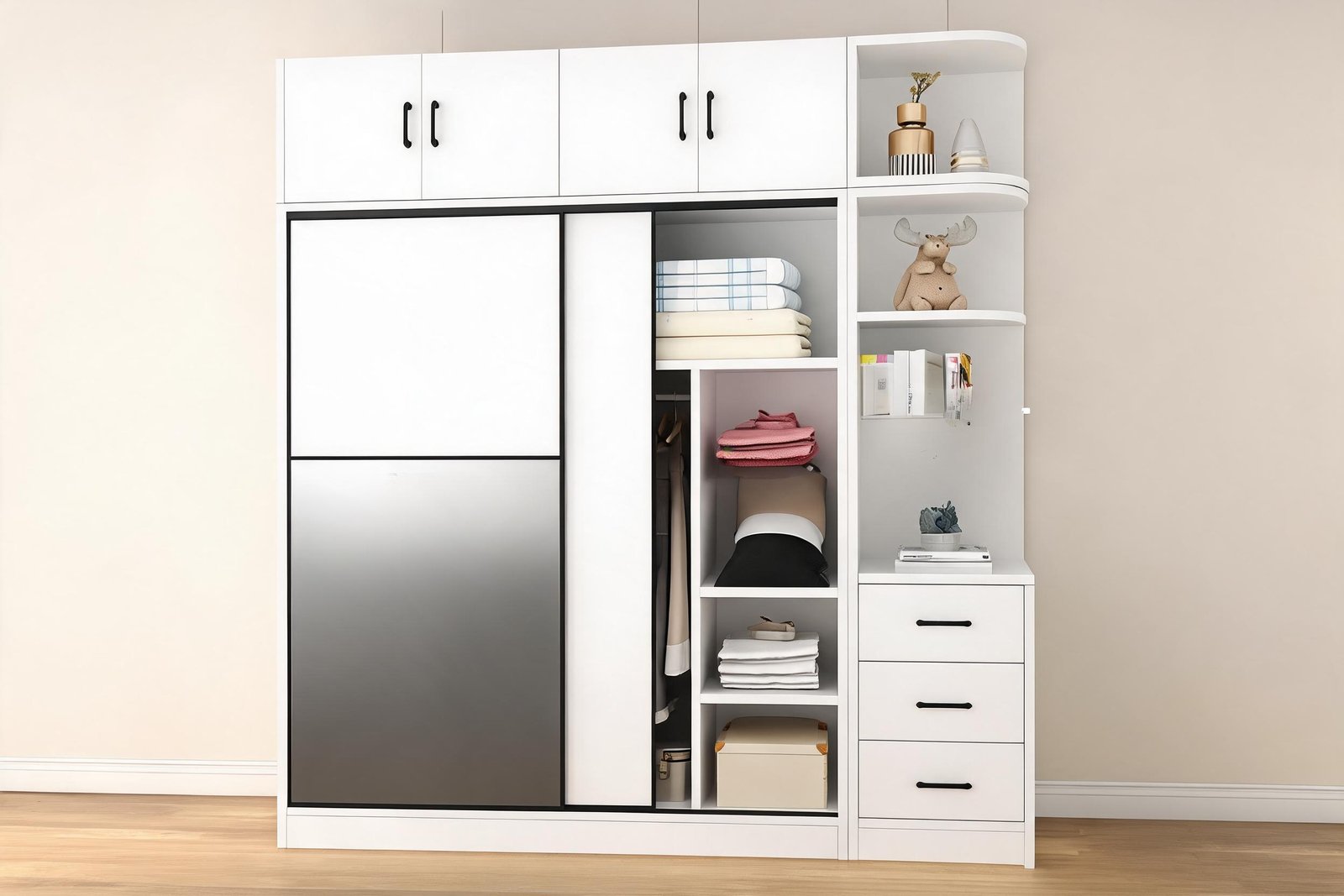
- Width — measure the wall, then leave room to walk. The Eco-Glide Sanctuary is available in widths from 100 cm up to 250 cm, so it scales from a single alcove to a full storage wall.
- Height — go floor-to-ceiling where possible. A 240 cm unit draws the eye upward and reclaims the vertical space most wardrobes waste.
- Depth — roughly 50 cm clears standard hangers; sliding systems add a little internal depth for the track.
The result is a wardrobe that fits the room and the volume of clothing you actually own — with the 94.5-inch (240 cm) sliding configuration giving you hanging rails, open cubbies, and bottom storage drawers in one wall-to-wall unit.
Sliding Wardrobe FAQ
Are sliding wardrobes good for small bedrooms?
Yes — they are the single best option for compact rooms because they need no door-swing clearance, letting you place a bed or bedside table closer to the wardrobe.
Can I access the whole wardrobe at once with sliding doors?
No. Sliding panels always overlap, so roughly half the interior is visible at a time. If you prefer to see everything at once, a hinged wardrobe is the better fit.
Do sliding door tracks need maintenance?
Only light care. Dust the bottom track occasionally to keep rollers gliding smoothly; a quality aluminium track system will run for years without further attention.
Is an E0 panel worth the extra cost for a wardrobe?
For a bedroom, yes. E0-grade panels emit significantly less formaldehyde than standard boards, which matters most in the room where you spend eight hours sleeping.
The Wardrobe Your Bedroom Is Asking For
Door style is a layout decision before it is a style decision — and for most modern bedrooms, sliding doors simply fit better. The Pristine Eco-Glide Sanctuary pairs smooth sliding doors with an E0-grade sustainable panel, hanging rails, and storage drawers in a clean white finish that brightens the room. Ready to see the options? Browse our full wardrobes collection here — or go straight to our sliding door wardrobes and find the configuration that fits your wall.
